

Supreme Court to Review Detention of Immigrants Without Bond Hearing
The U.S. Supreme Court accepted today to review whether the government can hold certain immigrants in custody without a bond hearing when they were already living in the country…

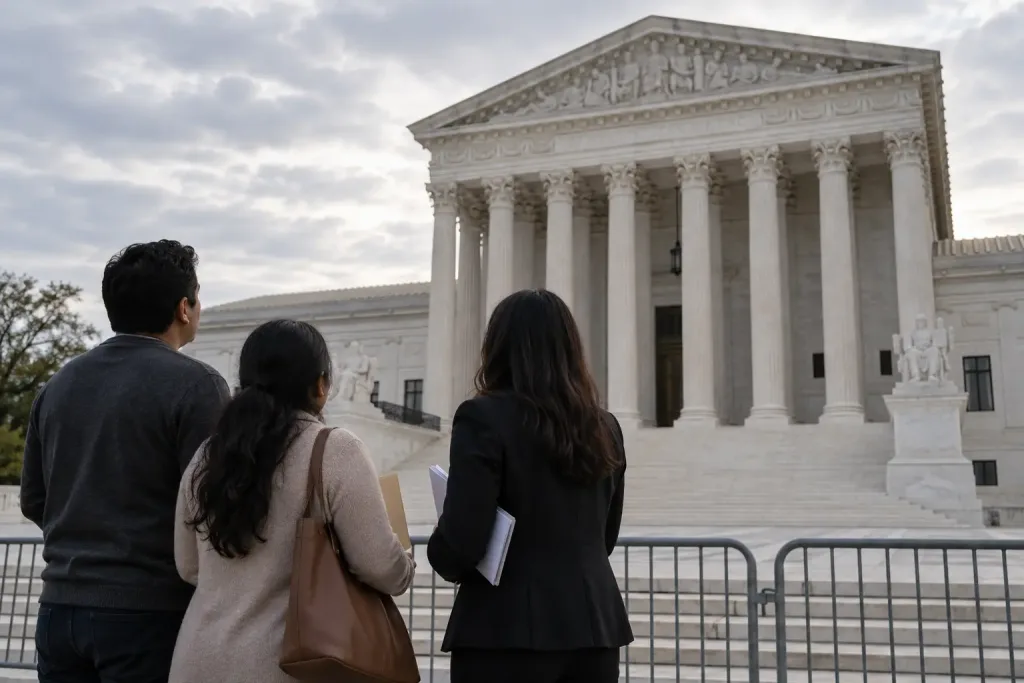
The U.S. Supreme Court accepted today to review whether the Government can keep certain immigrants in custody without a bond hearing when they were already living in the country when arrested. The case could resolve a split among federal courts, but acceptance of the case does not by itself suspend the policy or guarantee the release of a detained person.
The Supreme Court recorded that the petition arrived on July 2, 2026 after a decision by the Fifth Circuit Court of Appeals, with case acceptance coming nearly three months later, according to Reuters reported.
What the Supreme Court Decided and What It Did Not
The Court accepted to hear the litigation. That means the justices will examine the scope of two provisions of the Immigration and Nationality Act: one that the Government invokes for mandatory detention and another that allows consideration of bail release in certain cases.


There is still no Supreme Court ruling on the merits of this case. An oral argument date was also not announced in the consulted record. The new judicial session begins October 5, but the timeline for this case will be known later.
Why There Are Conflicting Rulings
The Fifth Circuit backed the Government’s position in February 2026. Its judicial opinion reversed orders that had granted bond hearings or release for two Mexican citizens.
Other appeals courts have interpreted the law differently. Previous coverage by Nueva News explained how the Third Circuit rejected mandatory detention without a bond hearing for people who had been living in the country for years. The split among federal courts led to the highest court’s intervention to resolve the dispute over immigrants’ right to request bail.
The split matters because the available outcome for a person can vary depending on where they are detained and which federal court has jurisdiction. The Supreme Court in this case can establish a national rule by resolving the case.
Who the Case Involves
The petitioners are Victor Buenrostro-Mendez and José Padron Covarrubias, case Buenrostro-Mendez vs. Bondi, Mexican citizens who entered the United States in 2009 and 2001, respectively, and were detained in 2025. Both are challenging their deportation proceedings and argue they should have had the opportunity to request a bond hearing.
The litigation focuses on immigrants present in the United States without legal admission who were arrested within the country. NOTE: This does not mean that every person in ICE custody is in the same legal situation. Other rules may apply depending on the manner of entry, background, previous orders, case stage, and place of detention.


What Changes Now for a Detained Person
For now, the answer depends on the judicial circuit, the individual case file, and the orders in effect in the corresponding jurisdiction. The Supreme Court’s acceptance of the case does not automatically create a national right to bail and does not eliminate favorable decisions that remain in effect in some places.
A bond hearing also does not mean automatic release. When the law allows requesting one, a judge can consider, among other factors, flight risk and public safety. The outcome depends
on the facts and evidence of each case.
Families who do not know the place of custody can consult the official ICE detainee locator. To verify hearings and immigration court decisions, the EOIR case information system is available. Also, those who have moved should remember that changing your address with USPS does not update records with USCIS or the court.
What Families Can Do While the Case Proceeds
It is advisable to gather appearance notices, immigration decisions, and identity documents; note the detention center and keep copies of everything. An immigration attorney or accredited representative
can determine which rule and precedent apply to the specific case file.
Remember that the Department of Justice maintains an official list of free or low-cost legal service providers and it is important to avoid notaries or facilitators who promise guaranteed release.
Likewise, the Court also has pending another case about deportations to third countries. Nueva News explained what it means that the Court allowed temporary resumption of those transfers. These are separate matters and each will follow its own timeline.


Frequently Asked Questions
Did the
Supreme Court Order the Release of Detained Immigrants
Canal oficial
Únete a nuestro canal de WhatsApp
Recibe las noticias más importantes al instante, sin spam. Solo lo que importa, cuando importa.

Comentarios
Inicia sesión para comentar
Es gratis y toma un minuto. Con tu cuenta también podés:
- Comentar y participar en la conversación
- Guardar notas para leer después
- Ver tu historial de lectura
- Recibir el boletín con tus temas favoritos