

ALERT: Supreme Court to Decide if Trump Can Indefinitely Detain Immigrants
The U.S. Supreme Court announced on October 1st that it will evaluate whether immigrants subject to deportation can be held indefinitely while their cases are resolved…


The Supreme Court of the United States announced Thursday, October 1st, that it will evaluate whether immigrants subject to deportation can remain detained indefinitely. The central question is whether this can occur while their cases are being resolved. The final ruling could support a key aspect of President Donald Trump’s hardline immigration policy. Or it could end it. The case is known as Rhoney v. Barbosa da Cunha. It was one of three that the court accepted before resuming activities Monday, at the start of a new nine-month term. Rulings in all three cases are expected by late June 2027 at the latest. The central question is whether immigrants in deportation proceedings should have the opportunity to argue for their release. This would occur at a bail hearing while their case proceeds.
The Case of a Brazilian Detained During a Traffic Stop
The judges will hear an appeal from the Trump administration. The case involves Ricardo Aparecido Barbosa da Cunha, a man from Brazil who entered the United States without documents in 2005.
He was detained following a traffic stop in Norwood, Massachusetts, in September 2025. Barbosa da Cunha challenged his detention in federal court.


A judge ordered a bail hearing. It subsequently determined that the man could be released while the deportation process continued. The Second Circuit Court of Appeals, based in New York, upheld that decision.
At least nine federal appeals courts have already ruled against this government policy. This was noted by the American Civil Liberties Union (ACLU). This division among courts led the Supreme Court to intervene in the case.
What Federal Law Says About Immigration Detention
Since summer 2025, the Trump administration has attempted to apply a broad interpretation of the 1996 immigration law. Under this reading, anyone who entered without official inspection must remain detained. They would have no right to a bail hearing, regardless of how long they have been in the country.
The Department of Homeland Security (DHS) issued this guidance in July 2025. Until then, the law was applied primarily to people detained near the border. It did not apply to those who had already been living in the country for years.
Deputy Attorney General D. John Sauer called the case a «matter of paramount importance in immigration law.» He did so in court documents. Sauer argued that the policy eliminates a «perverse incentive»: those who evade detention upon entry receive more favorable treatment than those detained at the border.
This case does not contemplate immigrants convicted of certain crimes. Under a separate federal provision, known as the Laken Riley Act, such individuals can already remain detained pending deportation. Separate lawsuits also question whether they should have the right to a bail hearing.
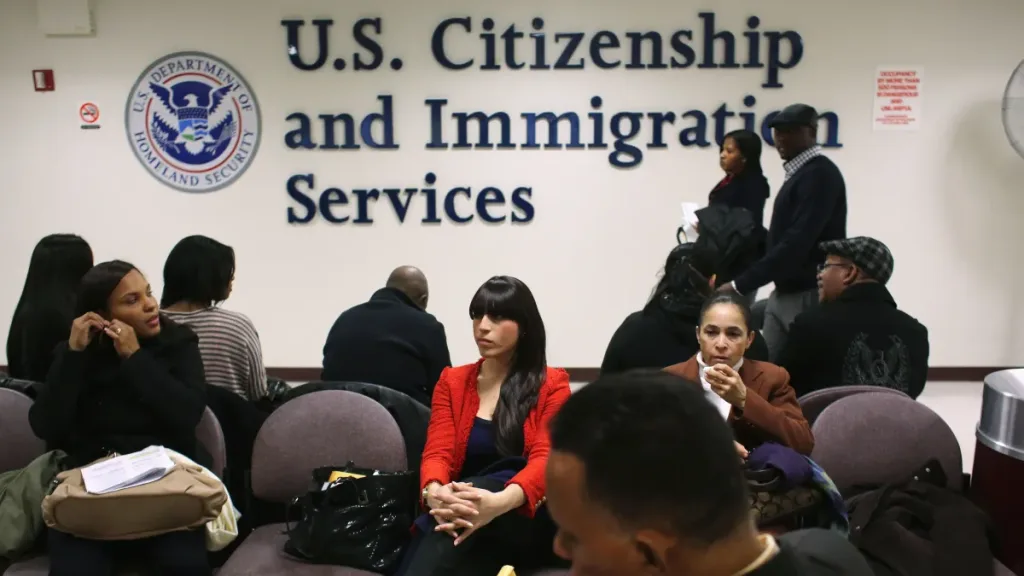

What the ACLU and Defenders of the Detained Argue
The plaintiffs, led by the ACLU, contend that the policy represents a «radical reinterpretation» of immigration law. They were joined by the New York Civil Liberties Union (NYCLU) and a private law firm.
Attorneys noted that some people detained under this policy arrived in the United States as small children. They also asserted that those challenging their detention do not pose a flight risk. Nor do they pose a danger to the public.
Thousands of people have already been detained under this policy. It could extend to millions of immigrants if the Supreme Court upholds it.
«The government cannot twist the law to detain immigrants for months or even years without a bail hearing,» the ACLU stated in a statement. While waiting for oral arguments and the final ruling, immigration attorneys recommend taking action soon. People who are detained or have pending deportation cases should consult their situation with a legal representative as soon as possible.
The Supreme Court’s decision could change detention rules for thousands of families across the country.
Canal oficial
Únete a nuestro canal de WhatsApp
Recibe las noticias más importantes al instante, sin spam. Solo lo que importa, cuando importa.

Comentarios
Inicia sesión para comentar
Es gratis y toma un minuto. Con tu cuenta también podés:
- Comentar y participar en la conversación
- Guardar notas para leer después
- Ver tu historial de lectura
- Recibir el boletín con tus temas favoritos