


U.S. Bombs Iran Following Attack on Vessel in Hormuz
The U.S. military bombed Iranian military positions Friday in retaliation for an Iranian attack on a cargo vessel in the Strait of Hormuz, escalating tensions despite a recent…

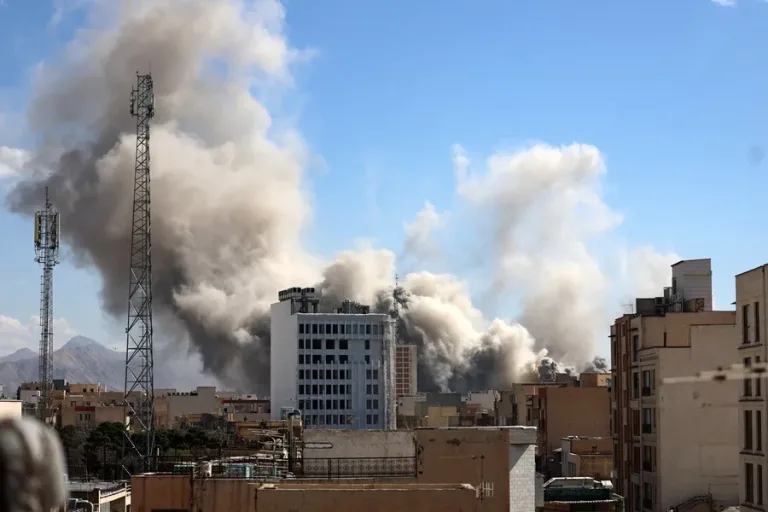
The delicate geopolitical balance in the Middle East has suffered a critical fracture. The U.S. Army bombed various military positions in Iran this Friday. The military action responds to the attack perpetrated by the Islamic Republic against a cargo vessel in the Strait of Hormuz. The reprisal occurs despite Tehran recently agreeing with Washington to reopen this strategic maritime route, according to U.S. Central Command (Centcom).
U.S. Air Force aircraft attacked drone warehouses, missile depots, and Iranian radar coastal bases. Centcom, with operational headquarters in Florida, formally accused Iran of directly violating the current ceasefire. U.S. attacks concentrated near the Iranian port of Sirik, completely disrupting diplomatic negotiations. The panorama of stability sought to be consolidated in the region has retreated toward a phase of open hostility.
The military body justified the aggression as a forceful response to provocations by the Tehran regime. The target of the previous attack was the merchant vessel M/V Ever Lovely, sailing under the Singapore flag. The cargo ship, operated by Evergreen, was leaving the Strait of Hormuz along the Oman coast when it suffered impact. The escalation of violence threatens to paralyze global energy commerce again.



The Hormuz Strait Incident and the Breakdown of the Bilateral Pact
Central Command denounced that the unjustified aggression against commercial maritime transport clearly violated international security commitments. Military commanders noted that Iran’s dangerous behavior undermined freedom of navigation in a strategic corridor. This incident occurs at a time when commerce was attempting to normalize after months of trade tensions. The affected shipping route is responsible for the transit of one-fifth of the world’s energy resources.
Hours before the reprisal, President of the United States, Donald Trump, characterized the incident as a senseless violation. The president accused Iran of launching at least four one-way attack drones against civil vessels in transit. Allied intelligence agencies confirmed that three of the devices were intercepted by maritime defenses. However, a fourth explosive device impacted solidly on the upper deck of the Singapore container ship.
The attack was located 7.5 nautical miles southeast of the town of Dahit, in Omani territory. The British Maritime Trade Operations Agency (UKMTO) recommended extreme caution to all fleets in the zone. The International Maritime Organization (IMO) reacted by immediately suspending its coordinated ship evacuation program. International operators fear that the waters of the Persian Gulf will again become a zone of direct combat.
Implications for the Crude Oil Market and the Future of Nuclear Negotiations
This bombing constitutes the first large-scale confrontation since the bilateral memorandum of understanding was signed in June. Washington and Tehran had agreed to halt mutual hostilities to begin talks about Iran’s nuclear development program. The pact established a 60-day truce period to normalize commercial navigation in the region. White House authorities warned that any use of civil or military force would receive a symmetrical response.
The international price of oil reacted immediately to reports of bombings on the shores of Sirik. Brent crude registered a one percent increase, positioning itself above $73 per barrel. Financial analysts warn that a prolonged closure of the strait would cause a supply crisis at a global level.
Canal oficial
Únete a nuestro canal de WhatsApp
Recibe las noticias más importantes al instante, sin spam. Solo lo que importa, cuando importa.

Comentarios
Inicia sesión para comentar
Es gratis y toma un minuto. Con tu cuenta también podés:
- Comentar y participar en la conversación
- Guardar notas para leer después
- Ver tu historial de lectura
- Recibir el boletín con tus temas favoritos