


U.S. Flexibilizes Sanctions on Venezuela Due to Earthquake
The U.S. Government temporarily flexibilized financial restrictions on Venezuela this week to facilitate rescue and reconstruction operations following devastating earthquakes…

U.S. foreign policy has undergone a strictly exceptional shift due to force majeure circumstances. The U.S. Government authorized a temporary flexibilization of financial restrictions imposed on Venezuelan territory this Thursday. This determination seeks to immediately facilitate all banking operations linked to rescue and reconstruction efforts. The measure responds to the humanitarian catastrophe caused by a series of powerful earthquakes that shook the South American nation. American authorities confirmed that the current priority focuses on protecting the lives of affected civilians.
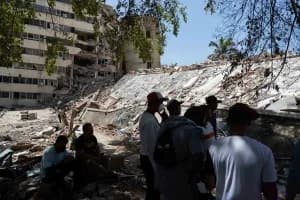
The announcement from diplomatic channels coincides with a devastating panorama in Venezuela’s major cities. Official reports confirm at least 235 deaths and more than 4,300 citizens with injuries of varying severity. In response to this crisis, the Office of Foreign Assets Control (OFAC) issued a special general emergency license. This legal document temporarily suspends prohibitions under the Regulations of Sanctions against Venezuela (VSR) for charitable purposes. The flexibilization will remain in effect until 12:01 a.m. on October 23, 2026.
The administrative decision represents the most significant coordinated effort between Washington and Caracas in recent years of political distance. The double earthquake severely deteriorated hospital infrastructure, communication networks and potable water distribution systems. Therefore, rapid flow of external financial resources is essential for supplying basic survival materials. Below are the specifications of permitted transactions and economic amounts allocated for the contingency.



What are the legal limits of the license issued by the Treasury Department?
The Office of Foreign Assets Control rigorously specified the financial mechanisms that are enabled under this exceptional decree. The general license authorizes the processing and transfer of international funds intended to support relief operations. Additionally, the regulation allows banking entities from third countries to channel resources to Venezuela exclusively for humanitarian purposes. In this way, international aid agencies will be able to acquire food, medicine and rescue tools directly.
Despite the opening of these financing channels, the Treasury Department clarified that structural sanctions remain in effect. The authorization does not permit under any circumstance the unblocking of assets or property previously frozen under the VSR regulation. Nor does it enable any other commercial or industrial activity unrelated to medical care and logistics for the affected population. The measure seeks to prevent resources from being diverted toward political purposes or particular government interests.
The emergency that prompted this international response originated from two earthquakes measuring 7.2 and 7.4 on the Richter scale. Both seismic movements occurred with a difference of just 39 seconds, causing the instantaneous collapse of numerous residential structures. The violence of the geological phenomenon exceeded the response capacity of local civil protection agencies. Therefore, U.S. financial assistance is complemented by a massive package of direct technical support.
How will the multimillion-dollar assistance package approved by Washington be distributed?
The U.S. Government approved a budget allocation of 150 million dollars for addressing the Venezuelan crisis. American authorities designed a distribution scheme divided into two major blocks to ensure spending transparency. First, a sum of 100 million dollars was allocated to the United Nations Office for the Coordination of Humanitarian Affairs (OCHA). This international agency will be responsible for coordinating macro logistics and the distribution of temporary camps.
The remaining 50 million dollars will directly finance rescue operations being executed in the affected area. These funds will enable the hiring of specialized medical personnel and the acquisition of large-scale water purification systems. The distribution of these financial resources and the international entities responsible for their execution are subject to strict oversight mechanisms established by Washington.
Canal oficial
Únete a nuestro canal de WhatsApp
Recibe las noticias más importantes al instante, sin spam. Solo lo que importa, cuando importa.

Comentarios
Inicia sesión para comentar
Es gratis y toma un minuto. Con tu cuenta también podés:
- Comentar y participar en la conversación
- Guardar notas para leer después
- Ver tu historial de lectura
- Recibir el boletín con tus temas favoritos