

A Legal Loophole in New York Prevented Charges in the Cornell Case?
The Tompkins County District Attorney’s office in New York reopened an alleged gang rape case at Cornell University that occurred in October 2024, after no charges were filed…

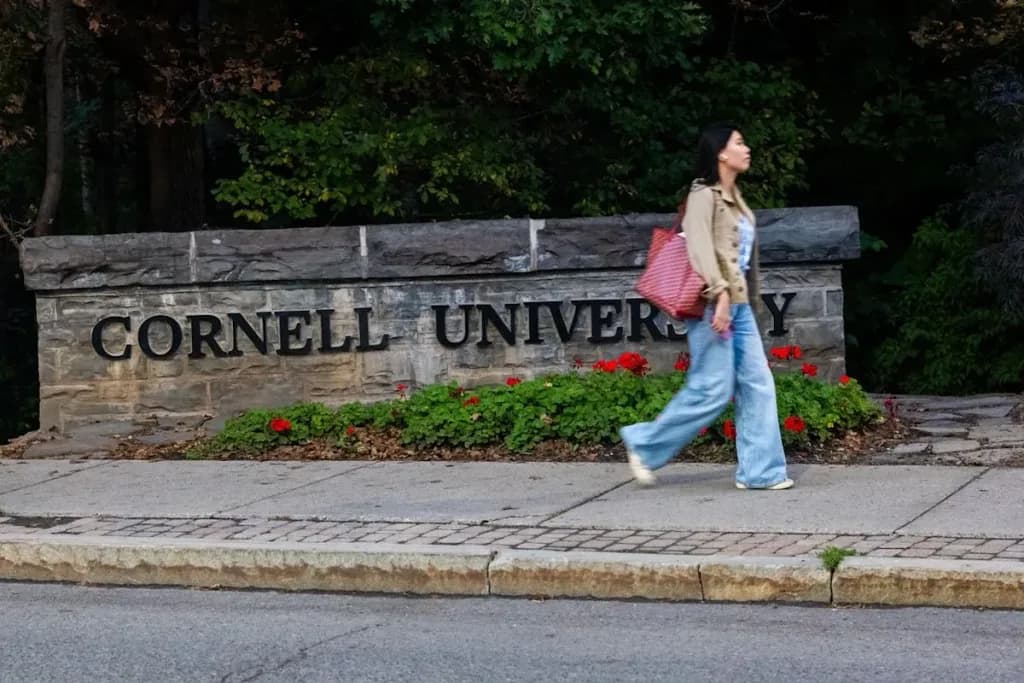
The Tompkins County District Attorney’s office in New York reopened the case of an alleged gang rape at a Cornell University fraternity that occurred in October 2024. In 2024, there were no charges because, according to the prosecutor, state law excludes cases of voluntary intoxication, which reignites debate over an alleged legal loophole.
Cornell is a private Ivy League university based in Ithaca, New York. A former student, identified as Jane Doe (a pseudonym protecting her identity), filed a civil lawsuit this month against the university and seven members of the Chi Phi fraternity, according to CNN. She alleges she was sexually assaulted for hours, and the lawsuit seeks damages. The men do not face criminal charges so far.
Prosecutor Matthew Van Houten told CNN that the conduct was reprehensible, but that does not mean it violated criminal law. Later, a transcript of Doe’s interview with campus police led him to reopen the case, according to MS NOW. He will now present the case to a grand jury, a group of citizens who decide whether there is evidence to formally charge, reported UPI.
The «Legal Loophole» of Voluntary Intoxication, Explained
New York’s Penal Law states that a person cannot give consent if they are «mentally incapacitated» (Articles 130.00 and 130.05). According to CNN, that occurs only if an intoxicating substance was administered to them without their consent. Drinking or using drugs by one’s own choice does not fall under that definition, which is why there is talk of a «legal loophole» or «voluntary intoxication exclusion.»
Van Houten explained that to prosecute, he had to prove beyond reasonable doubt that there was no consent, according to CNY Central. He stated that Doe’s affidavit did not allege that she was drugged without her knowledge. Doe told police that she agreed to the initial encounter but not to subsequent contact, and that the experience «felt like coercion,» according to CNN and Yahoo News.
This exception exists in about 19 states, according to CNN. New York’s law was written in the 1990s for cases of people drugged without their knowledge, explained assemblyman Jeffrey Dinowitz to CNN. Stefan Turkheimer, vice president of public policy at RAINN (Rape, Abuse & Incest National Network), said the case reveals a systemic failure.
Eight Years of Bills Without Reaching a Vote
Dinowitz, a Democrat, proposed in 2019 a law to prevent the victim’s voluntary intoxication from being used as a defense in sexual crimes. He reintroduced it each year through 2026, but it never reached a vote in the full Assembly, the state’s lower chamber, according to CNN. For him, the current law is «practically a blank check» for those who commit assault.
Opponents express concern about the difficulty of pinpointing the exact moment a person is too intoxicated to consent. Others ask whether a law that facilitates more prosecutions would disproportionately affect people of color due to biases in the criminal justice system. Both objections are part of the debate, according to CNN.
In Texas, survivor Summer Willis crawled to the state capitol to demand a change in that state’s law. Texas later passed the Summer Willis Act, which defines consent more clearly. Willis told CNN that the lack of that definition happened to her more than a decade ago and sent a message to Doe: «You are not alone.»


Grand Jury, Independent Review, and Task Force: What’s Next
Governor Kathy Hochul, a Democrat, requested an independent review of Cornell’s response and called the allegations «horrifying,» according to ABC News. She then announced that the university agreed to hire outside attorneys for that investigation, reported UPI. Hochul also asked her team to study how to strengthen protective laws on campuses.
State Assembly Speaker Carl Heastie formed a task force to review sexual assault laws, according to CNY Central. Its recommendations will arrive for the 2027 legislative session. Additionally, lawmakers are pushing two bills on intoxication and affirmative consent, that is, a clear and voluntary «yes,» according to News10.
Meanwhile, the Tompkins County grand jury will decide whether there is grounds to file charges.
Canal oficial
Únete a nuestro canal de WhatsApp
Recibe las noticias más importantes al instante, sin spam. Solo lo que importa, cuando importa.

Comentarios
Inicia sesión para comentar
Es gratis y toma un minuto. Con tu cuenta también podés:
- Comentar y participar en la conversación
- Guardar notas para leer después
- Ver tu historial de lectura
- Recibir el boletín con tus temas favoritos