



Trump Offers Millions to States Supporting His Migration Agenda
The Trump Administration will allocate up to 3 billion dollars to incentivize migration cooperation from states and local governments that agree to sign 287(g) agreements, allowing local police to act as immigration agents to detain undocumented migrants.

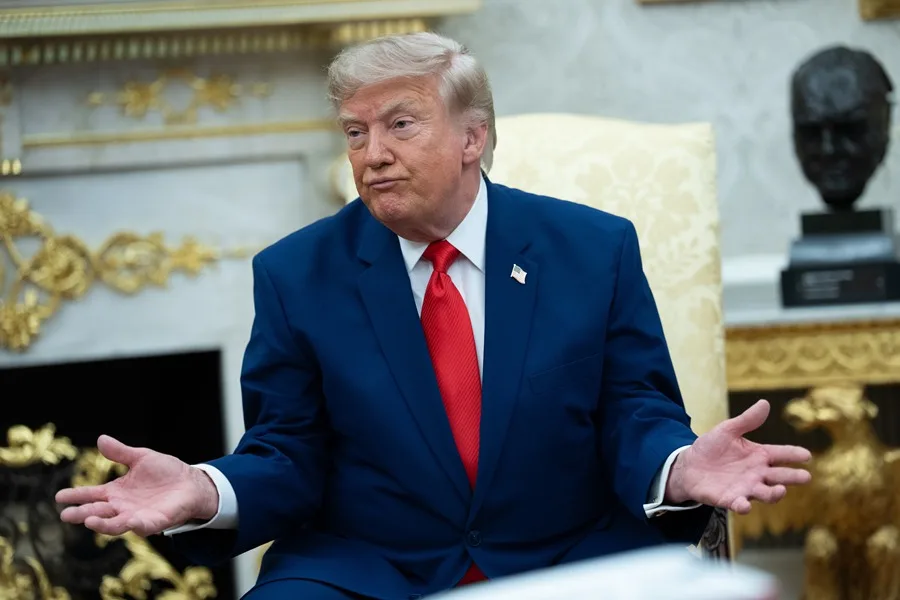
The Donald Trump Administration will use up to 3 billion dollars to incentivize migration cooperation. States and local governments will be able to access these federal funds if they agree to ally with the Department of Homeland Security (DHS).
The central requirement is to sign or maintain an agreement known as 287(g). This pact allows local police to act as immigration agents, converting them into a «force multiplier» to detain undocumented migrants.
The financial offer is part of the official effort to expand large-scale detentions. However, for the Latino community, the return of these agreements represents a direct threat that evokes histories of racial discrimination and abuse in various counties across the country.
What are 287(g) agreements and how do they work?
The program’s name comes from Section 287(g) of the Immigration and Nationality Act of 1996. The mechanism allows the DHS and local security agencies to sign cooperation memorandums to share functions.
In practice, a certified state or county police officer can question a person about their immigration status during a traffic stop. They can also process requests, called detainers, to keep the person in custody until the Immigration and Customs Enforcement Service (ICE) assumes the case.

When Trump returned to the White House in January 2025, he revived the model known as task force. Under this scheme, local police can enforce migration law while performing their routine duties on the streets.
Texas, one of the states with the harshest migration policies, was the first to sign. By the end of July 2026, the model was already operating with 1,467 agencies in 32 states and two territories, concentrated heavily in Florida and Texas.
Why was the program suspended before?
The 287(g) agreements in their patrol mode were suspended during the Barack Obama administration. The decision was made after the Department of Justice (DOJ) found that they encouraged indiscriminate raids and civil rights violations.
The most well-known case occurred in Maricopa County, Arizona, under the command of former Sheriff Joe Arpaio. A 2011 DOJ investigation revealed that his agents engaged in an unconstitutional pattern of racial profiling against Latinos.
The investigation found that Arpaio’s agents conducted constant operations in Hispanic neighborhoods. Latino drivers were up to nine times more likely to be stopped by police than non-Latino drivers, with officers using minor traffic violations as an excuse to verify their immigration status.
A similar case was documented in North Carolina. In 2012, the DOJ determined that the Alamance County Sheriff’s Office placed checkpoints at the entrances of Latino neighborhoods, detaining Hispanic drivers up to ten times more than the rest of the population. Both agreements were canceled.
How will states access Trump’s funds?
Canal oficial
Únete a nuestro canal de WhatsApp
Recibe las noticias más importantes al instante, sin spam. Solo lo que importa, cuando importa.

Comentarios
Inicia sesión para comentar
Es gratis y toma un minuto. Con tu cuenta también podés:
- Comentar y participar en la conversación
- Guardar notas para leer después
- Ver tu historial de lectura
- Recibir el boletín con tus temas favoritos