



Work Visa for the U.S. from Tijuana: Requirements
To obtain a work visa from Tijuana, the process begins with sponsorship from a U.S. employer who must file the petition with USCIS, not the consulate itself. The applicant then completes visa application forms, pays fees of approximately $205, attends biometric appointments, and participates in a consular interview that does not guarantee automatic approval.

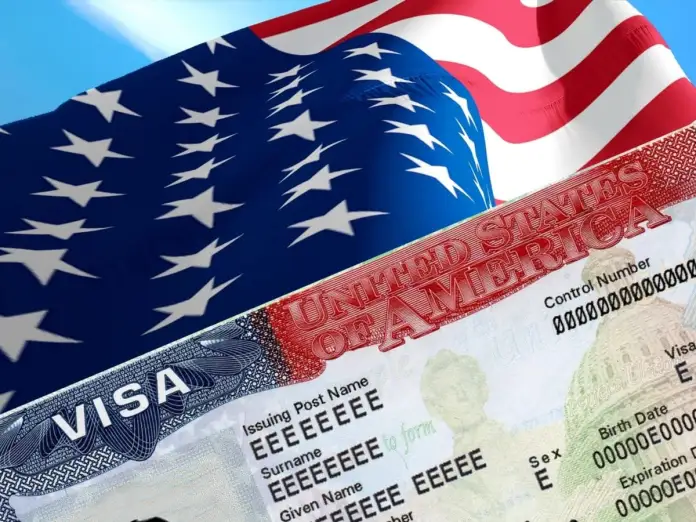
For a work visa from Tijuana, the starting point is almost never the consulate: it begins with an employer in the United States. The process requires sponsorship, correct documentation, and a consular interview that does not guarantee automatic approval.
In practice, this procedure is very important for Mexicans seeking legal employment in the U.S. It is also key in a context of increased immigration and labor surveillance. According to the State Department, most temporary work visas require a prior petition approved by USCIS.
Who Initiates the Process?
The applicant typically does not submit the case on their own. First, a U.S. company must act as the petitioner. That company submits Form I-129 to USCIS, which is the petition for a nonimmigrant worker.
In some cases, the employer also needs a labor certification from the Department of Labor. That step seeks to demonstrate that hiring the foreign worker does not harm available U.S. workers. Then, if everything proceeds, USCIS issues Form I-797 as a notice of approval.
That order is important because it avoids confusion. Many people believe they can start alone from Tijuana. But the system, in most categories, requires an already-approved employment relationship.
What Work Visas Exist?
The United States manages several categories of temporary work. The most well-known are the H-1B, H-1B1, H-2A, and H-2B. Each one corresponds to a different work profile and requires different evidence.
The H-1B is typically used for specialized professionals. The H-1B1 applies to certain professionals under trade agreements. The H-2A is directed at temporary agricultural work. The H-2B covers non-agricultural jobs, also of a temporary nature.
Additionally, there are categories for transferred executives, artists, athletes, and religious workers. Each one has its own rules. For this reason, an incorrect classification can delay or ruin the case.
How is it Processed from Tijuana?
After USCIS approval, the applicant completes Form DS-160 on the Consular Electronic Application Center portal. That document is the basis of the nonimmigrant visa application.
Then comes the fee payment. In this case, it usually amounts to around $205. Afterward, the applicant schedules an interview appointment at the U.S. General Consulate in Tijuana or at the embassy in Mexico City.
They must also go to the Applicant Service Center, known as CAS. There they collect biometric data and photographs. That step is mandatory before the consular interview.
The location of Tijuana is strategic for many Mexicans
Canal oficial
Únete a nuestro canal de WhatsApp
Recibe las noticias más importantes al instante, sin spam. Solo lo que importa, cuando importa.

Comentarios
Inicia sesión para comentar
Es gratis y toma un minuto. Con tu cuenta también podés:
- Comentar y participar en la conversación
- Guardar notas para leer después
- Ver tu historial de lectura
- Recibir el boletín con tus temas favoritos