



Legionellosis Outbreak in New York Rises to 46 Cases
A legionnaires’ disease outbreak on Manhattan’s Upper East Side has sickened at least 46 people with 22 hospitalized, prompting authorities to order cleaning of cooling towers in 19 buildings that tested positive for Legionella pneumophila bacteria.

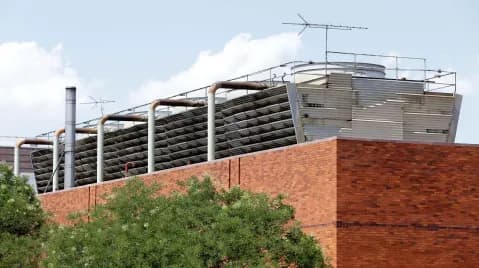
A legionnaires’ disease outbreak has the Upper East Side of Manhattan on high alert. At least 46 people have fallen ill and 22 remain hospitalized, according to city health authorities. Cases are concentrated in three zip codes: 10028, 10128, and 10075, corresponding to the Carnegie Hill and Lenox Hill neighborhoods. No deaths have been reported so far. Authorities ordered the evacuation, cleaning, and disinfection of cooling towers in 19 buildings. All yielded preliminary positive results for Legionella pneumophila bacteria, the cause of the disease.
Transparency Under Pressure
Mayor Zohran Mamdani announced that the city will publish the addresses of affected buildings, saying this step is essential so New Yorkers can continue their daily routines with clear information. Health Department Commissioner Dr. Alister Martin pointed to climate change as an aggravating factor, explaining that New York now has a subtropical climate that favors outbreaks like this. This phenomenon is not unique to the city. Legionella outbreaks are increasing globally, from Melbourne to Italy’s Lombardy region, through New Hampshire and Manhattan itself.
The Science Behind Transmission
Dr. René Najera, director of public health at the College of Physicians of Philadelphia, sums it up clearly: the bacteria does not discriminate—wherever it finds warm water, it thrives and multiplies uncontrollably. Legionella pneumophila lives in warm aquatic environments and is usually harmless. But when inhaled as vapor or mist, it can cause severe pneumonia. Symptoms include cough, fever, headache, and difficulty breathing. The disease affects fewer than three people per 100,000 residents, but up to 10% of those diagnosed die.
Silent and Unpredictable Transmission
George Yates, a 54-year-old Harlem resident, knows that randomness firsthand. He contracted the disease in 2018 during an outbreak in Washington Heights, a neighborhood where he neither lived nor worked. Yates believes he was exposed while driving through the area for a ride-sharing application. He was hospitalized for five days and made a complete recovery. His case illustrates how unpredictable exposure can be. Authorities describe the current investigation as an almost criminal process—but instead of seeking people, they are tracking buildings with cooling towers that tested preliminarily positive for the bacteria.
The Challenge of Confirming Origin
A positive test is not enough to identify a building as the source of an outbreak. Epidemiologists must culture water samples to determine whether the detected bacteria was alive or already dead. They must then sequence the genome of those cultures and compare the material with sputum samples taken from sick patients. The entire process could take up to a month to complete. In many smaller-scale outbreaks, the exact source is never identified with certainty. That uncertainty fuels tension between different city authorities over how to act in the meantime.
Tension Between Disinfection and Evidence
City Council President Julie Menin is demanding the preventive disinfection of all towers in the area, calling for action even in buildings that have not yet tested negative. Menin declared it is shameful to keep waiting while more people get sick each day. The Health Department responded that disinfecting before sampling would prevent them from tracing the true origin of the outbreak. The official insists the city must act more quickly. The health agency, meanwhile, defends its protocol as the only way to identify with certainty the actual source of transmission.
A Disease With an Unequal Face
The current outbreak is hitting the Upper East Side, one of Manhattan’s most affluent neighborhoods. However, studies and previous outbreaks show the disease disproportionately affects low-income communities. Marquis Harrison, president of a community board in Harlem, said bluntly at a public meeting in March that they previously only saw Legionella in the South Bronx and Harlem. That pattern fuels debate over equity in health response. Many residents of communities historically hit by the bacteria question why media attention only arrives now, with a more prosperous neighborhood affected.
Recommendations for Residents
The Health Department was clear: the problem does not come from building plumbing systems. Residents in the area can continue drinking tap water, showering, and using air conditioning normally. Dr. Benjamin Wyler, an emergency medicine physician at Mount Sinai Health System, offered a specific recommendation: do not live in fear, but do seek medical attention for persistent fever, cough, or general malaise. Legionnaires’ disease received its name in 1976 when American Legion veterans fell ill in Philadelphia. Half a century later, the bacteria remains unpredictable, and warm weather only facilitates its spread. Health authorities insist the source of transmission was identified in time, asserting they acted quickly to inform New Yorkers as soon as the first positive results in the towers were confirmed. For now, monitoring continues in the 19 buildings identified as points of interest while genetic analysis is completed, with the city maintaining heightened surveillance.
Canal oficial
Únete a nuestro canal de WhatsApp
Recibe las noticias más importantes al instante, sin spam. Solo lo que importa, cuando importa.

Autor
Anthony AstonitasDesarrollador de Software 12 años de experiencia
Comentarios
Inicia sesión para comentar
Es gratis y toma un minuto. Con tu cuenta también podés:
- Comentar y participar en la conversación
- Guardar notas para leer después
- Ver tu historial de lectura
- Recibir el boletín con tus temas favoritos