



Can a Judge Stop Construction of the Big Bend Wall in Texas?
District Judge Orlando García will decide on August 28, 2026, whether to halt construction of the Big Bend 2 border wall in West Texas, following a lawsuit by indigenous communities and environmental organizations seeking a temporary restraining order.

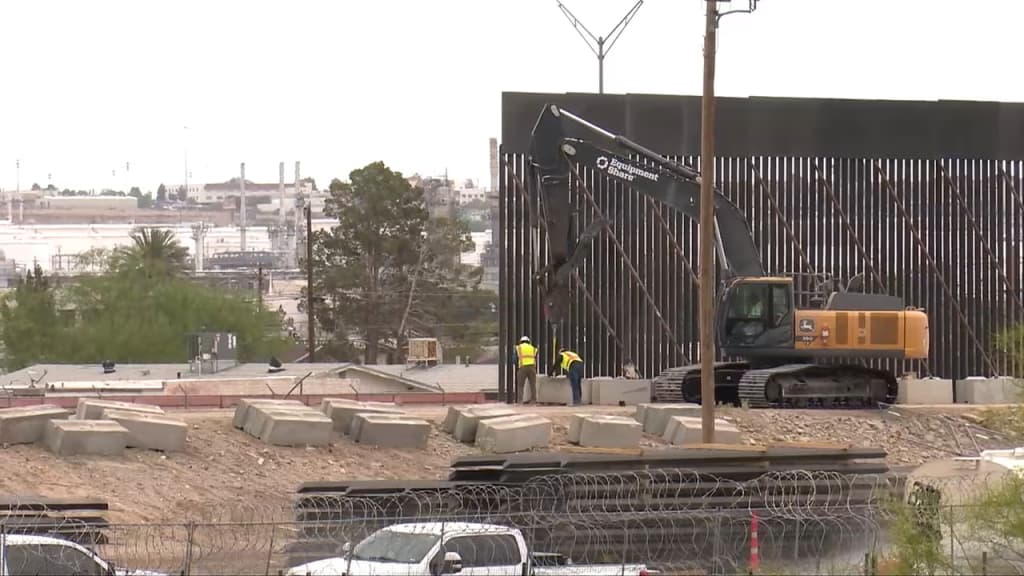
District Judge Orlando García will decide on August 28, 2026, the future of one of the country’s most disputed border projects. He will determine whether to halt, at least temporarily, construction of the border wall known as Big Bend 2, in West Texas.
García, of the San Antonio District Court, will evaluate a lawsuit filed by indigenous communities and environmental organizations. He will determine whether to grant a temporary restraining order (TRO) against the Department of Homeland Security (DHS) and the U.S. Customs and Border Protection (CBP).
The evidentiary hearing is scheduled for August 28. Before that date, the federal government was required to respond to the lawsuit on Monday, August 24, and the plaintiffs have until Wednesday, August 26, to reply.
The Contract Behind the Big Bend 2 Project
According to CBP construction plans, the project covers a stretch running from Ruidosa, Texas, through Presidio, to the boundaries of Big Bend Ranch State Park. The construction area covers 62 miles of border.
DHS awarded that contract to Fisher Sand & Gravel Co. in March 2026, for $1.2 billion. The company, headquartered in North Dakota with a subsidiary in Arizona, would build a «vertical border barrier system» at an approximate cost of $17 million per mile.
Big Bend 2 is part of a broader three-project plan totaling 175 miles of border in Hudspeth, Jeff Davis, and Presidio counties. The other two sections, awarded to Barnard Construction Company, represent additional contracts worth $1 billion and $960.4 million.
Who Opposes and What They’re Asking the Court
In the lawsuit filed in federal court, opponents include the organization The People of La Junta for Preservation, members of the Lipan Apache community, and local residents. Friends of the Ruidosa Church and the Presidio Municipal Development District also joined related litigation.
The plaintiffs request four main points. The first is a temporary restraining order that immediately suspends all construction work, excavation, and use of heavy machinery while the lawsuit proceeds.
The second point demands protection of archaeological and cultural sites within Big Bend National Park. They seek to halt work to prevent irreversible destruction of historical artifacts and landscapes considered sacred by indigenous peoples.
Religious Freedom and Legal Limits of Government
The third point of the lawsuit invokes the Religious Freedom Restoration Act. The plaintiffs argue that the government’s work blocks access to ceremonies, prayer areas, and the banks of the Rio Grande, historically used by Lipan Apache communities.
The fourth point contends that DHS exceeded the powers granted by Congress. The plaintiffs assert that the agency circumvented environmental and cultural protection regulations by invoking a June order from Secretary Markwayne Mullin, which exempted the project from certain federal and state requirements.
That order, according to the lawsuit, did not exempt another law that holds the Interior Secretary and the National Park Service responsible for protecting and developing the park. Christina Hernández, founder of The People of La Junta, explained that construction threatens areas where the Lipan Apache «lived, hunted, and worshipped for generations.»
What Each Side Must Prove to the Judge
For Judge García to approve a temporary suspension, the plaintiffs must meet three fundamental legal requirements. The first is to demonstrate that the work will cause irreversible damage before the lawsuit concludes, such as the destruction of archaeological sites.
The second requirement is to present legal arguments with solid foundation to win the case in the future. The third consists of the judge evaluating whether the damage from continuing the work outweighs the harm of temporarily halting it.
CBP, for its part, denies that it is constructing a 30-foot wall inside the park.
What Comes After the August 28 Hearing
If the judge grants the temporary restraining order, the pause would be provisional until the case is fully resolved. The litigation could escalate to an appeals court if either party decides to challenge the decision.
While the legal process advances, heavy machinery has already begun to be removed from certain areas of Big Bend National Park, according to local reports from this week. That movement does not represent a judicial decision, but rather an operational adjustment ahead of the hearing.
For communities in the region and Hispanic families in Texas following this case, the August 28 decision will set a precedent on the legal limits of border projects on protected lands. Those wishing to follow up can consult public documents of the case at the San Antonio District Court.
Canal oficial
Únete a nuestro canal de WhatsApp
Recibe las noticias más importantes al instante, sin spam. Solo lo que importa, cuando importa.
Etiquetas

Autor
Anthony AstonitasDesarrollador de Software 12 años de experiencia
Comentarios
Inicia sesión para comentar
Es gratis y toma un minuto. Con tu cuenta también podés:
- Comentar y participar en la conversación
- Guardar notas para leer después
- Ver tu historial de lectura
- Recibir el boletín con tus temas favoritos