



Arizona: Supreme Court Eliminates Proposition 212 — What It Means
The Arizona Supreme Court removed Proposition 212 from the November ballot after determining that initiative promoters failed to gather enough valid signatures to qualify. The measure would have reformed the state’s private education voucher program by imposing income limits and stricter oversight requirements.

Anthony Astonitas
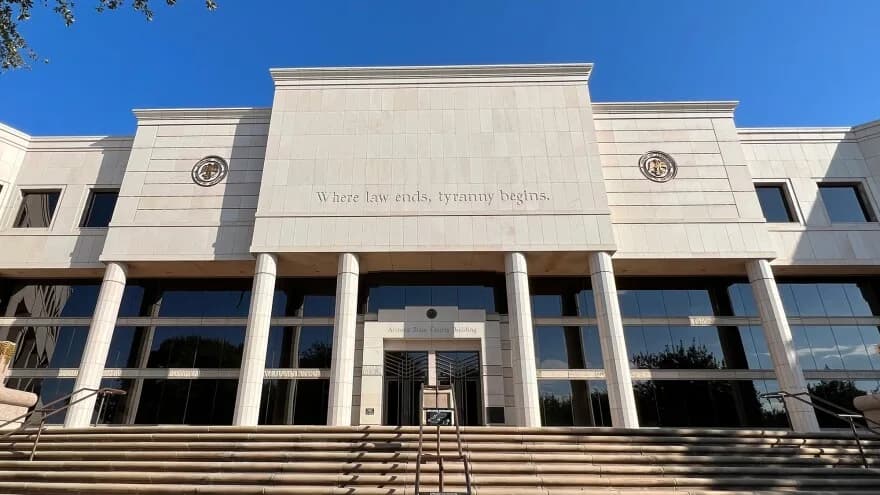
The Arizona Supreme Court removed Proposition 212 from the November ballot. This measure sought to reform the state’s private education voucher program, one of the most costly and controversial in the state.
The initiative’s promoters, known as the Protect Education Act, submitted nearly 420,000 signatures to the Secretary of State in July. Despite that number, an exhaustive review determined they did not reach the valid signatures necessary to move forward.
The ruling, issued Tuesday, ends months of legal dispute over how to count duplicate signatures. The decision also ends a second consecutive attempt to reform Arizona’s largest school scholarship system.
How the Final Count Was Reached
The Secretary of State, headed by Adrian Fontes, determined that approximately 389,000 of the submitted signatures were eligible for verification. A random sampling of 5% of those signatures yielded a validity rate of 75.2%, applied across the state’s 15 counties.
That percentage was projected onto the total of eligible signatures, rather than manually reviewing each one. Proposition 212 needed at least 255,949 valid signatures to qualify for the November ballot.
A trial court invalidated tens of thousands of signatures for duplication during the litigation. After that ruling, both sides agreed that the minimum valid signatures was around 317,000, with a maximum close to 352,000, before applying the validity rate.
The Ruling That Decided the Dispute
The Arizona Supreme Court upheld the method used by the trial judge to invalidate duplicate signatures. The judges rejected the initiative’s promoters’ argument that the calculation penalized the same disqualified signatures twice.
With the formula endorsed by the justices, attorneys on both sides agreed the initiative fell short by about 12,000 signatures. Attorney Kory Langhofer, who represented the plaintiffs, estimated the final count at approximately 240,000 valid signatures.
Chief Judge Ann Scott Timmer ordered the case to return to the lower court. There, the validity rate will be formally applied to confirm the final number, although the practical result is already clear: Prop. 212 will not reach voters.
What the Proposal Sought to Change
Proposition 212 would have imposed an annual household income limit of $150,000 to participate in the Education Savings Accounts (ESA) program. It would also have required returning unused account money to public schools.
The measure also sought to tighten controls against fund misuse. It would have required schools receiving voucher payments to comply with certain educational and safety standards.
Arizona’s ESA program grew from 144 participants in 2011 to nearly 103,000 students in fiscal year 2026. Its annual spending already exceeds $1 billion, equivalent to nearly 8% of the state’s combined public education spending.
The Other Proposal That Also Fell
The Supreme Court simultaneously resolved the fate of Proposition 145, a parallel measure backed by conservative sectors. That initiative would have blocked both Prop. 212 and future attempts to reform the voucher program.
With Prop. 212 off the ballot, Prop. 145 loses its practical purpose. Both proposals depended on each other in Arizona’s November legislative landscape, so voters will not decide this year on any changes to the school scholarship system.
This is the third consecutive time that Save Our Schools Arizona, the organization behind previous reform attempts, has failed to bring its proposal to voters. The Goldwater Institute, which supports the voucher program, celebrated the ruling as a victory for families already using the system.
What Comes Next for Arizona Families
Without Proposition 212, the ESA program will continue operating without income limits or the new supervision restrictions proposed. Families already receiving funds will continue to do so under current rules, with no imminent short-term changes.
Annual program amounts range from $4,700 to $47,500 per student, depending on the type of educational needs. The Arizona Legislative Budget Office projects that enrollment could reach 113,602 students during the next fiscal year.
The debate over the future of vouchers in Arizona does not end with this ruling. Democratic legislators and teachers’ unions are already evaluating different legal and legislative strategies for the next election cycle, while program supporters insist that its growth demonstrates real demand from families for alternative educational options.
Canal oficial
Únete a nuestro canal de WhatsApp
Recibe las noticias más importantes al instante, sin spam. Solo lo que importa, cuando importa.

Autor
Anthony AstonitasDesarrollador de Software 12 años de experiencia
Comentarios
Inicia sesión para comentar
Es gratis y toma un minuto. Con tu cuenta también podés:
- Comentar y participar en la conversación
- Guardar notas para leer después
- Ver tu historial de lectura
- Recibir el boletín con tus temas favoritos