



Trump Investigates Whether Iran Is Hiding Military Drones in Cuba
President Donald Trump announced Monday that his administration is investigating whether Iran has military drones stored in Cuba and warned that Washington will take action if that military presence is confirmed. Trump provided no evidence or specific details about the alleged Iranian weaponry allegedly stored on the island.

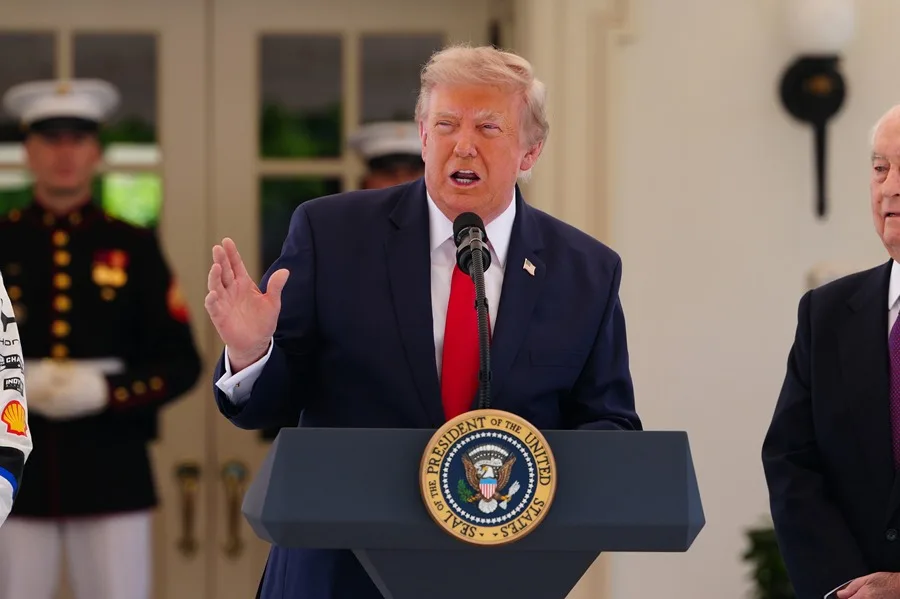
United States President Donald Trump sounded the alarm on Monday. He stated that his government is investigating whether Iran has drones stored in Cuba. He warned that Washington will take action if that military presence is confirmed.
«If they have them, and it’s very possible that they do, we will take care of it,» Trump declared to journalists. He spoke from the Oval Office, in reference to a question about Iranian weaponry on the island. The question came from a journalist from a media outlet with conservative leanings.
«We are not going to allow that to happen,» the president added bluntly. He indicated that U.S. authorities are analyzing whether Tehran is using Cuba as a storage facility for drones. Trump offered no evidence or concrete details about the alleged weaponry.
Trump Also Suspects Iranian Missiles
The president went further during his remarks to the press. He suggested that the island could also be storing missiles of Iranian origin. He asserted that his administration «is investigating that right now.»
Trump presented no photographs, intelligence documents, or technical details about the weaponry. He also did not specify the number, model, or exact location of the alleged equipment. He mentioned that Secretary of State Marco Rubio was in an adjoining room.
That mention suggested the matter is already part of the State Department’s agenda. For now, the only confirmed fact is that Washington opened a review of the issue. There is no confirmation that the weaponry actually exists in Cuban territory.
The Origins of Suspicions About Cuban Drones
Trump’s statements coincide with an analysis published by Axios in May. The report cited classified intelligence about Cuba’s acquisition of more than 300 drones. These military systems would be of Russian and Iranian origin, acquired since 2023.
According to those sources, Cuba’s Revolutionary Armed Forces are studying the use of these systems. They would consider targets such as Naval Base Guantanamo or facilities in Key West. The report itself warns that labeling these drones as «defensive» distorts standard military terminology.
The Cuban regime, headed by Miguel Díaz-Canel, invoked its right to legitimate self-defense. However, it did not explicitly deny possession of these attack systems. Foreign Minister Bruno Rodríguez warned of a possible «bloodbath» in response to any U.S. military action.
Military Cooperation with Multiple International Partners
Cuba’s interest in drones predates even 2023, according to specialized sources. It would respond to a policy of military cooperation with Iran, Russia, and other allied countries. Belarus, Algeria, Venezuela, and Vietnam would also be part of this collaboration network.
One documented precedent dates back to 2012. At that time, a Belarusian company revealed a joint project to assemble drones with Cuba. In 2024, a high-ranking Cuban armed forces official visited military facilities in Belarus.
The sources consulted by Axios point to models similar to those used in the Ukraine war. Among them are the Iranian Shahed-136, Arash-2, and Mohajer-6. The Russian Geran-2 drone was also mentioned as part of Cuba’s possible arsenal.
Growing Pressure from Washington on Havana
Trump’s statement comes amid a broader offensive against Cuba. On the same Monday, the State Department announced sanctions against ten additional Cuban entities. The measure seeks to halt what Washington calls «malign activities of the Cuban regime.»
Among the sanctioned entities is Enetec, a state-owned fuel import and export company. Also included was Coreydan, which imports subsidized fuel from Mexico. The Foreign Trade Business Group and the Maritime Port Transport Group complete the list.
Last June, sanctions had already reached Cuban President Miguel Díaz-Canel. They also affected several of his relatives and Colonel Alejandro Castro Espín. The latter is the son of former President Raúl Castro and younger brother of Fidel Castro.
Legal Precedents Against Raúl Castro
The Justice Department also filed a formal charge against Raúl Castro. The complaint is related to the downing of two civilian aircraft that occurred in 1996. That attack, attributed to Cuban forces, resulted in the deaths of four people.
Three of the victims were U.S. citizens and one was a legal resident of the country. The case represents one of the most tense episodes in recent bilateral history. It now adds to the growing list of legal actions against Cuban leadership.
Cuba is currently experiencing a severe economic and energy crisis, with frequent blackouts. The U.S. embargo, in effect for more than six decades, aggravates this situation. The Cuban government recently approved 176 measures to loosen its economic model.
An Episode That Adds to Regional Tension
Trump’s statements coincided with a new U.S. military offensive against Iran. That same Monday, U.S. Central Command launched additional strikes against Iranian targets. The escalation occurred following the collapse of a ceasefire between the two countries.
Despite the tension, Trump asserted he has not ruled out a negotiated solution with Tehran. Meanwhile, Cuba has not responded officially.
Canal oficial
Únete a nuestro canal de WhatsApp
Recibe las noticias más importantes al instante, sin spam. Solo lo que importa, cuando importa.

Comentarios
Inicia sesión para comentar
Es gratis y toma un minuto. Con tu cuenta también podés:
- Comentar y participar en la conversación
- Guardar notas para leer después
- Ver tu historial de lectura
- Recibir el boletín con tus temas favoritos