



Trump Claims His Tariffs Stopped Eight Wars
President Donald Trump claimed in a CNBC interview that his tariff policies have stopped eight wars, describing them as diplomatic tools and deterrents in high-tension geopolitical situations. He defended the use of tariffs as a uniquely American strategy, asserting they represent the inseparability of economic and diplomatic power.

Anthony Astonitas
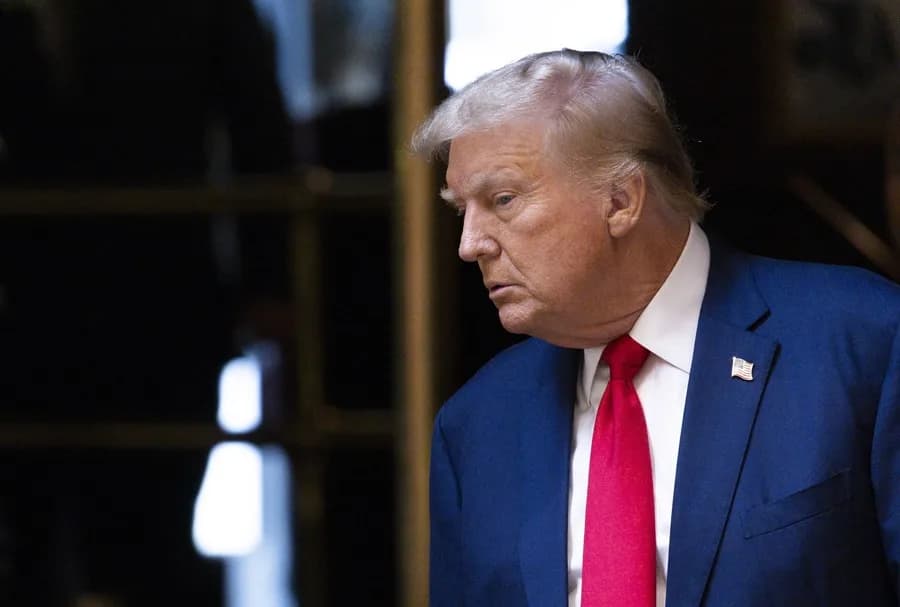
U.S. President Donald Trump made an assertion that generated international uproar. In an interview with CNBC broadcast Thursday, he defended his tariff policies with an unprecedented argument. He asserted that the tariffs he imposed after his return to the White House are also a diplomatic tool. And he went further: he claimed that thanks to them he stopped «eight wars.»
«I stopped eight wars thanks to tariffs,» the president declared without providing details. He explained that he threatened to impose levies of up to 200% on several countries. He did so «as a deterrent mechanism» in situations of high geopolitical tension. According to Trump, this strategy «has been recognized by various international actors.»
The president also philosophically justified this tool with a direct statement. «I think it’s something very American,» he said while defending the use of tariffs as an instrument of pressure. The statement summarizes his vision that economic power and diplomatic power are inseparable. For Trump, commercial levies go far beyond foreign trade.
Tariffs Hold Up in Courts
Trump‘s tariff strategy faces not only political challenges. It has also fought battles in the country’s federal courts. On the 12th, an appeals court issued a decision favorable to the Government. It backed the Trump administration’s continued application of the 10% global levy imposed in February.
This ruling came after the Supreme Court invalidated much of the previous tariff scheme. The court granted the Government a temporary victory with its ruling. It allowed the rates to continue being collected while the legal process advances. The levies were applied under Section 122 of the 1974 Trade Act.
However, these tariffs have an expiration date set for the end of July. Unless Congress decides to extend them, they could expire in weeks. This legal uncertainty adds pressure on the Executive to consolidate its legislative position. The debate over tariffs is far from closed in Washington.
Iran, Semiconductors, and Rivalry with China
At another point in the interview, Trump addressed his policy toward Iran. He firmly defended the U.S. operation to block the Strait of Hormuz. «It was a steel wall,» he described the strategy implemented in the conflict. His words sought to reframe the intervention away from the concept of conventional war.
«This is not a war as such. It’s the denuclearization of Iran,» the president reiterated. He added that «you cannot allow them to have a nuclear weapon» under any circumstance. This stance summarizes the line his administration has maintained toward Tehran. Maximum pressure, both economic and military, remains the axis of his strategy.
Trump also enthusiastically defended the expansion of the semiconductor industry. He assured that the United States will reach «a dominant position» in that strategic sector. The reason is clear for the president: semiconductors are «key to national security.» This argument connects directly with the technological rivalry he maintains with China.
«If We Don’t Do It, China Will»
The president framed both his commercial policy and artificial intelligence development in the same context. Everything comes down to direct competition with Beijing, according to his geopolitical vision. «If we don’t do it, China will,» he stated forcefully during the interview. This phrase sums up the urgency with which Trump approaches global technological leadership.
On artificial intelligence, the president was even more categorical. «The United States is far ahead» in this field, he asserted without qualification. «We are leading substantially in AI over China and over any other country,» he stated. This declaration comes amid a technological race that defines 21st-century power.
The interview also touched on the Government’s relationship with major tech companies. Trump did not confirm whether the State is studying a 5% stake in OpenAI. The Financial Times had reported that possibility days earlier, generating great expectation. However, the president revealed a telling detail about his relationship with the sector.
Trump and His Appetite for Stakes in Tech Companies
The president revealed that the Government already holds a stake in Intel. He mentioned it as an example of his willingness to intervene directly in the private sector. «Intel had a problem and I said I can solve it, but I want 10% of the company,» he stated. The statement suggests an unprecedented negotiation model between the Executive and major corporations.
This pattern of behavior generates a profound debate about the limits of presidential power. Mixing regulatory decisions with stock ownership raises questions about conflicts of interest. Trump, however, presents it as a way for the State to participate in technology benefits. A logic that his critics firmly reject.
What becomes clear after this interview is Trump’s comprehensive vision of power. Tariffs, wars, technology, and corporate stakes are part of a
Canal oficial
Únete a nuestro canal de WhatsApp
Recibe las noticias más importantes al instante, sin spam. Solo lo que importa, cuando importa.

Autor
Anthony AstonitasDesarrollador de Software 12 años de experiencia
Comentarios
Inicia sesión para comentar
Es gratis y toma un minuto. Con tu cuenta también podés:
- Comentar y participar en la conversación
- Guardar notas para leer después
- Ver tu historial de lectura
- Recibir el boletín con tus temas favoritos