



Trump Claims Control of Strategic Strait of Hormuz
U.S. President Donald Trump affirmed that his country has «total control» of the Strait of Hormuz, one of the world’s most strategic maritime routes, amid growing Middle East tensions between Iran and Israel. The strait is critical for global energy commerce, with a significant portion of the world’s oil passing through it.

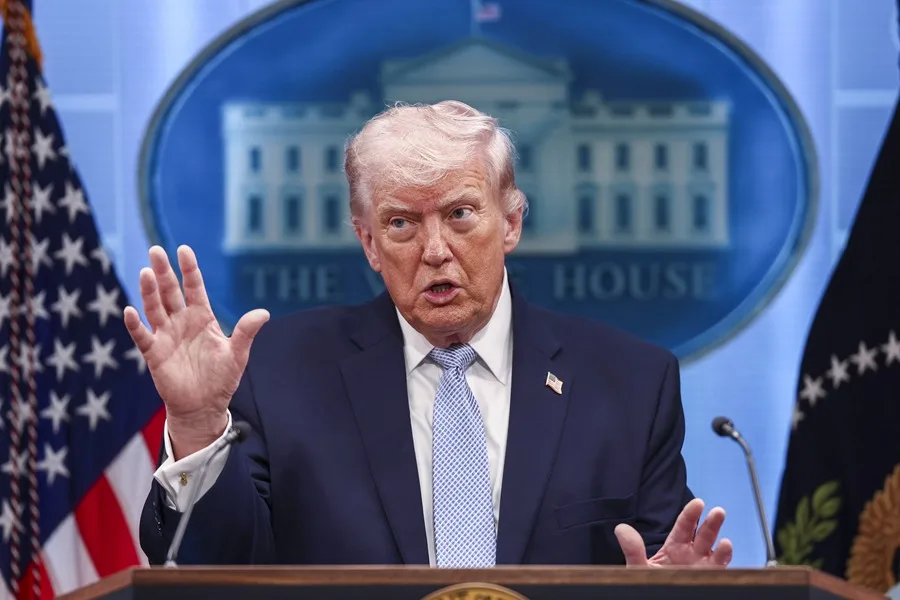
U.S. President Donald Trump affirmed that his country has «total control» of the Strait of Hormuz, one of the world’s most strategic maritime routes. His statements come amid growing tensions in the Middle East, marked by the conflict between Iran and Israel and the impact on commercial transit in the region. The Strait of Hormuz is key to global energy commerce, as a significant portion of the world’s oil passes through it. Any interruption in this passage generates concern in international markets and in major economies dependent on crude oil. Trump’s words come after Iran’s announcement of a supposed closure of the strait. Tehran made that decision following a new escalation of violence in southern Lebanon, linked to Israeli bombardments against Hezbollah targets.
What does «total control» of the Strait of Hormuz mean?
Trump maintained that the United States has the military capability to guarantee security in the zone. He affirmed that the U.S. Navy can impose an effective blockade if the situation requires it. According to the president, that strategy has had greater impact than direct military actions. The president made these statements during an event at the White House. There he emphasized that control of the strait responds to a deterrence policy against possible threats. He also sought to convey reassurance to international markets. However, the situation on the ground remains uncertain. While Iran maintains it has restricted transit, U.S. authorities assure that ships continue to navigate. That contradiction reflects the complexity of the scenario.
What do allies and the U.S. Government say?
Trump’s statements align with what his Vice President JD Vance expressed. From Switzerland, where he participates in negotiations with Iran, Vance indicated that merchant vessels continue to use active routes in the strait.
This point is key to evaluating the real impact of the crisis. If maritime transit is maintained, the immediate effect on global commerce would be limited. Nevertheless, the tension raises the risk of a greater escalation.
The U.S. Government has also insisted that there is room for diplomacy. Last week, Washington and Tehran signed a memorandum of understanding aimed at reducing the conflict. The agreement contemplates a sixty-day timeframe to advance toward a broader pact. Trump warned that that commitment must be fulfilled. He noted that, otherwise, the United States could resume more forceful actions. His message aims to maintain pressure on the Iranian regime.
How does tension with Israel influence the conflict?
The conflict is not limited to the relationship between the United States and Iran. Israel’s stance introduces an additional factor of instability. Prime Minister Benjamin Netanyahu has indicated that he will not withdraw troops from southern Lebanon.
That position complicates ongoing negotiations. Iran has expressed its rejection of Israeli operations and already delayed talks scheduled in Switzerland. The regional context remains volatile. Trump tried to downplay Netanyahu’s statements. He assured that he has the capacity to manage the relationship with Israel. Additionally, he left open the possibility of intervening politically if the situation demands it. The U.S. president emphasized his pragmatic approach. He noted that he would seek quick solutions to avoid a greater escalation. Nevertheless, he did not detail what specific measures he could adopt.
Global impact of the Strait of Hormuz
The Strait of Hormuz connects the Persian Gulf with the Indian Ocean. Through this route, nearly one-fifth of the world’s oil passes. Its importance makes it a critical point for the global economy. Any threat to this passage generates volatility in crude oil prices. Markets react to the possibility of interruptions in supply. This affects both energy producers and consumers. Additionally, the strait is relevant to maritime commerce in general. It transports not only oil, but also natural gas and other strategic goods. Its closure would have immediate consequences in m
Canal oficial
Únete a nuestro canal de WhatsApp
Recibe las noticias más importantes al instante, sin spam. Solo lo que importa, cuando importa.

Comentarios
Inicia sesión para comentar
Es gratis y toma un minuto. Con tu cuenta también podés:
- Comentar y participar en la conversación
- Guardar notas para leer después
- Ver tu historial de lectura
- Recibir el boletín con tus temas favoritos