



Postal Service Tightens Mail-in Voting: What Voters Need to Know
The U.S. Postal Service released new regulations to strengthen controls on mail-in voting for upcoming elections, requiring enhanced tracking of ballots and barcode systems, though the measure remains frozen pending federal court approval after a judge blocked its implementation.

Anthony Astonitas
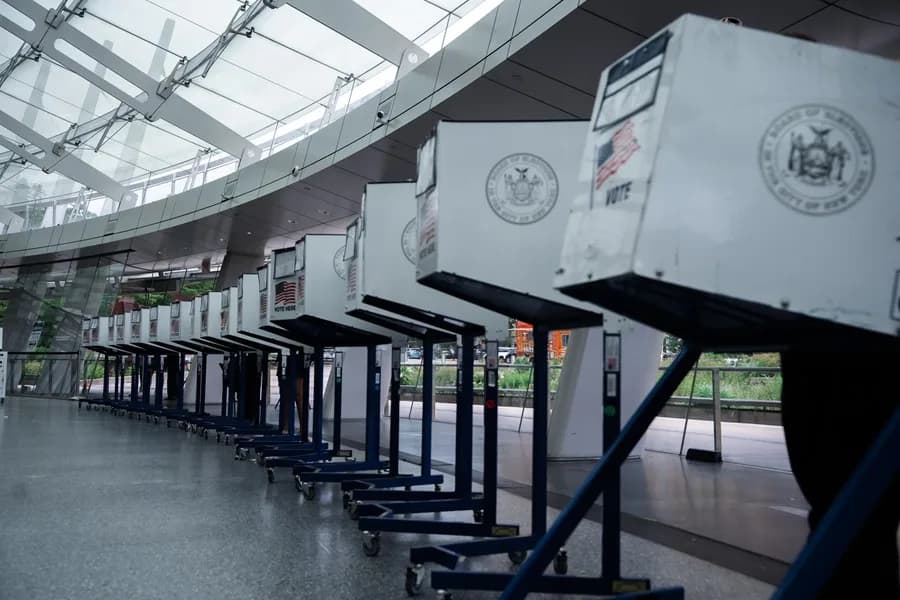
The United States Postal Service published regulatory standards to tighten control over mail-in voting ahead of the upcoming elections. The agency conditioned the implementation of the 95-page document to approval by a federal court, following a judicial halt ordered by District Judge Indira Talwani in Boston.
The measure seeks to implement greater tracking requirements for election envelopes sent by mail throughout the country. The administrative decision stems from an executive order signed by President Donald Trump last March. Various civic organizations and local authorities questioned the proposal, arguing it attempts to restrict ballot access just months before the electoral process.
New Controls and Identification on Election Ballots
The regulation requires state governments to mandatorily provide lists of voters who receive ballots at their homes. Additionally, states must implement unique barcodes on outgoing and return envelopes. The objective stated by the entity is to cross-reference information to verify that processed ballots match exactly those issued by each jurisdiction.
David Steiner, USPS postmaster general, argued that the plan aims to ensure alignment between state records and mail actually sent. The agency assured that personnel will not register political affiliation or inspect the contents of sealed ballots. However, the mail service will retain external envelope data, including addresses and tracking codes.
Representatives of the Democratic sector and local election administrators stated that the postal agency lacks legal authority to alter voting rules. Furthermore, they warned that the proximity to the electoral process creates voter confusion and hampers the logistics of local offices. The regulation will remain frozen until federal courts resolve ongoing lawsuits against the measure.
Impact of Mail-in Voting on the Hispanic Community
Mail-in voting constitutes a key tool for millions of Hispanic citizens who balance long work hours with family responsibilities. According to data from the Pew Research Center, more than 35 million Latino voters are eligible to vote in the country, playing a decisive role in key states. The imposition of bureaucratic barriers or last-minute changes to the postal system could disproportionately affect workers with limited availability.
In several districts, working-class families depend on the postal network to exercise their constitutional right to vote early. The reduction of collection mailboxes or the tightening of postal identification requirements threaten to increase voter abstention in Hispanic neighborhoods. Civil rights organizations note that certainty and stability in participation rules are essential to guarantee community representation.
An example of this situation is that of María Elena González, a service sector worker in Nevada, who depends on mail-in voting to participate. «I work double shifts during the week and mail is the only safe way I have to vote without losing a work day,» she said in a recent interview. Cases like María Elena’s reflect the importance of maintaining an accessible and comprehensive system for workers in the region.
Legal Framework of Suffrage and Constitutional Powers
The Constitution grants states the primary authority to regulate the time, place, and manner of holding federal elections. While Congress has authority to oversee the processes, the intrusion of executive agencies into election administration often results in constitutional litigation. The National Voter Registration Act and the Help America Vote Act (HAVA) protect state autonomy in determining ballot issuance procedures.
For the Hispanic community, voting protection is also backed by Section 203 of the Voting Rights Act of 1965. This provision requires language assistance and translated ballots in jurisdictions with high concentrations of Spanish-speaking residents. Altering standard postal flows could compromise the timely delivery of this crucial bilingual material for voters.
Facing possible administrative delays or judicial disputes, legal specialists in
Canal oficial
Únete a nuestro canal de WhatsApp
Recibe las noticias más importantes al instante, sin spam. Solo lo que importa, cuando importa.

Autor
Anthony AstonitasDesarrollador de Software 12 años de experiencia
Comentarios
Inicia sesión para comentar
Es gratis y toma un minuto. Con tu cuenta también podés:
- Comentar y participar en la conversación
- Guardar notas para leer después
- Ver tu historial de lectura
- Recibir el boletín con tus temas favoritos