



ALERT: Trump Begins Border Wall Construction in Arizona
Construction of a new border wall section with Mexico began in late August 2026 in southern Arizona, advancing despite opposition from the Tohono O’odham Indigenous Nation, which claims the project violates their territorial sovereignty. The «Tucson 5» project spans approximately 100 kilometers near the tribal reservation as the Tohono O’odham Nation continues its legal challenge.

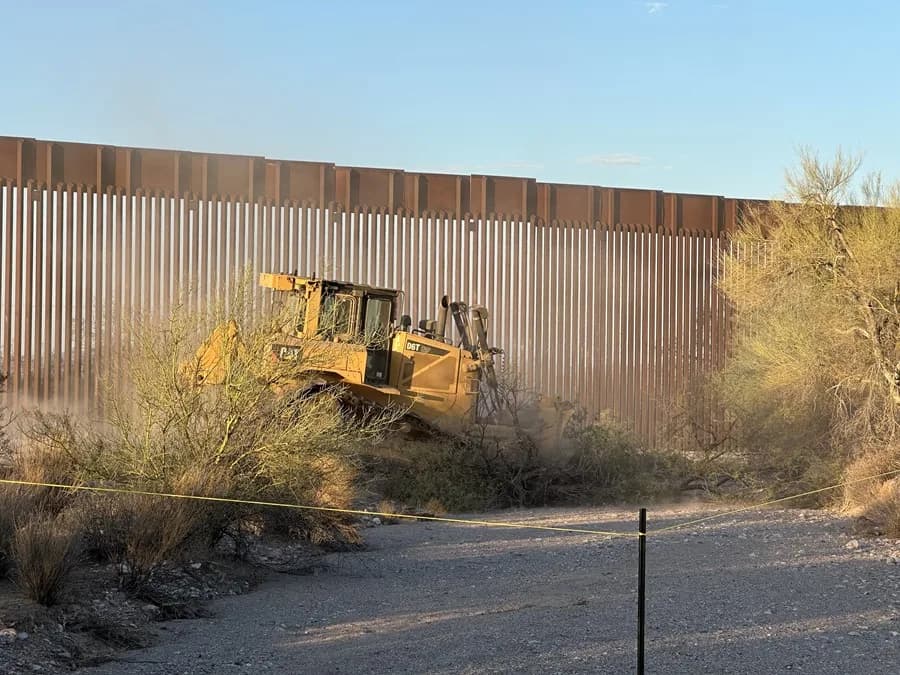
Construction of a new section of border wall with Mexico began in late August 2026 in southern Arizona. The project is advancing despite opposition from the Tohono O’odham Indigenous Nation, which contends that it violates their territorial sovereignty.
The section, known as the «Tucson 5» project, spans approximately 100 kilometers of land near the tribal reservation. The U.S. Customs and Border Protection Office (CBP) confirmed that it is already conducting surveying and sampling work in the area.
A project that reopens border dispute on tribal lands
The Tohono O’odham Nation argues that the wall threatens ceremonial sites and ancestral cemeteries within its territory. The reservation has 37,000 members, many of whom live on both sides of the border between Arizona and Sonora, Mexico.
«We have always protected our land, our community, long before this nation was established,» Verlon José, president of the Tohono O’odham Nation, told EFE. José added that the duty to protect the land remains valid today.
Tribal members frequently cross the border to attend religious ceremonies, pilgrimages, and family visits. The community warns that a physical barrier would disrupt those traditional movements.
The legal framework behind wall authorization
The legal dispute rests on a 1907 decree signed by President Theodore Roosevelt. That ordinance reserves an 18-meter-wide strip along the Mexican border as «federal use land.»
A federal judge in Washington, Richard Leon, rejected the tribe’s request to halt the work in August. He determined that the federal strip allows construction without formally altering the reservation’s boundaries.
The Department of Homeland Security (DHS) also invoked a provision of immigration law that allows it to exempt the project from certain environmental regulations. The Tohono O’odham Nation has already appealed the decision and seeks to expedite the process before an appeals court.
Contractors and armed agents arrive on tribal territory
Weeks after the court ruling, contractors and armed CBP agents entered tribal territory to begin preliminary work. The tribe characterized this entry as a violation of its internal transit codes.
CBP Commissioner Rodney Scott defended the project as a way to close a corridor used for drug and human trafficking. The federal agency awarded the contract to SLSCO LTD, a Texas construction company that also works on other sections of the border wall.
The estimated cost of the project in this area exceeds $1 billion, according to calculations cited by The New Republic. This funding comes in part from funds approved last year under the law known as the «One Big Beautiful Bill Act.»
Fewer migrant arrests, according to tribal leaders
Verlon José questioned the need for the wall given sustained declines in migrant arrests in that sector. «In the last two years, arrests have declined by 95 percent, and we don’t see why the need now,» he stressed to EFE.
José also noted that the tribe has historically cooperated with the federal government on border surveillance. This cooperation includes allowing Border Patrol agents to operate within its territory.
Arizona Congresswoman Adelita Grijalva publicly backed the tribe’s position. «This is not about building a wall or national security, this is about violating the rights of the Tohono O’odham Nation,» the legislator told EFE.
The risk to the sacred spring of Quitobaquito
In the midst of the dispute lies the Quitobaquito spring, a culturally sacred site for the tribe located outside the reservation. The lagoon is home to endangered species, including the Sonoyta tortoise and the Quitobaquito pupfish.
The tribe also warns about the risk to mountains considered sacred, such as Baboquivari, present along the border corridor. Environmental organizations have documented excavation work in the area with photographs.
Community members observe construction progress daily and conduct peaceful ceremonies at night. «There is great frustration, but also disillusionment over the lack of respect for our culture,» José lamented.
What comes next in the legal dispute over the border wall
The Tohono O’odham Nation maintains its active litigation and awaits a ruling from the Washington appeals court. Meanwhile, construction of the «Tucson 5» section continues under the protection of federal agents.
Organizations like the Center for Biological Diversity continue documenting construction progress and its potential environmental impact. Those wishing to learn about the litigation status can consult public records from the federal court in Washington D.C.
The outcome of this case could set a precedent on the limits of tribal sovereignty against federal border projects. Nueva News will continue following this dispute and the upcoming court hearings.
Canal oficial
Únete a nuestro canal de WhatsApp
Recibe las noticias más importantes al instante, sin spam. Solo lo que importa, cuando importa.

Comentarios
Inicia sesión para comentar
Es gratis y toma un minuto. Con tu cuenta también podés:
- Comentar y participar en la conversación
- Guardar notas para leer después
- Ver tu historial de lectura
- Recibir el boletín con tus temas favoritos