



Senate Blocks Law Aimed at Limiting Trump’s Powers in Venezuela
The U.S. Senate blocked a bill designed to restrict President Donald Trump’s military powers regarding future actions in Venezuela, with the measure failing to advance by a narrow 51-50 vote. Republicans argued the restriction was unnecessary because military operations in Venezuela had concluded with Nicolás Maduro’s capture, while Trump has begun direct diplomatic negotiations with the interim government led by Delcy Rodríguez.

Anthony Astonitas
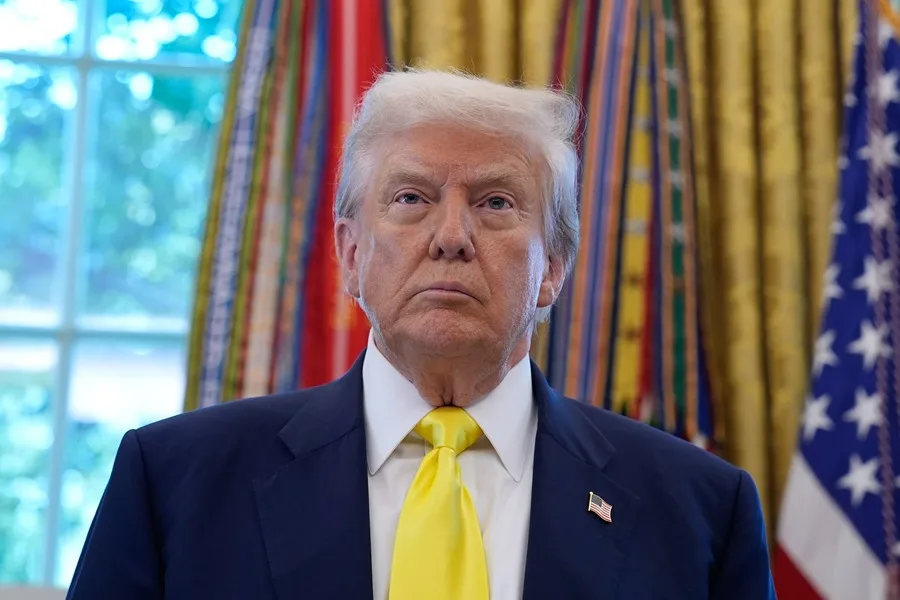
The U.S. Senate blocked a bill designed to restrict President Donald Trump‘s military powers regarding future actions in Venezuela. The measure, which had advanced symbolically the previous week, was stopped Wednesday through a vote that reflected current partisan divisions. With fifty-one votes in favor and fifty against, the resolution was frozen without immediate possibility of being reconsidered. Republicans argued that the measure was «irrelevant» because, according to them, U.S. military actions in Venezuela «have ended» with the capture of Nicolás Maduro.
The voting result reveals fractures within the Republican Party. Three Republican senators joined all Democrats in voting to continue considering the resolution. These were Susan Collins of Maine, Lisa Murkowski of Alaska, and Rand Paul of Kentucky. Collins and Murkowski, both known for their willingness to break party lines on national security issues, emphasized concerns about unlimited presidential authority. Paul, who historically opposes foreign military interventions, expressed that any military action requires Congressional authorization, not unilateral presidential decision.
The debate over Venezuela occurs in a context of growing regional uncertainty. Maduro remains in federal prison in New York facing narcoterrorism charges. Delcy Rodríguez, former vice president, now leads an interim government whose legitimacy is widely questioned. María Corina Machado, opposition leader and Nobel Peace Prize winner, awaits clarity about her future role. Trump has maintained communication with Rodríguez while also planning to receive Machado. This dual diplomacy generates uncertainty about U.S. intentions in Venezuela.
Why Did Republicans Block the Law?
Republican leaders argued that the power-limiting resolution was unnecessary because U.S. military operations had already concluded. Senator Josh Hawley emphasized that Secretary of State Marco Rubio had assured Congress that there was «zero possibility» of deploying additional troops in Venezuelan territory. Rubio supposedly communicated reassurance through a closed discussion with key Republican senators.
Republicans presented Maduro’s capture on January 3rd as the conclusion of U.S. intervention. They argued that with Maduro arrested and transferred to New York, the primary objective had been achieved. Therefore, limitations on future military powers were seen as unnecessary obstacles to presidential flexibility. This stance ignores that a restrictive law seeks precisely to prevent future interventions without Congressional authorization.
The Republican strategy also included political compromise. Rubio committed to appearing before the Senate Foreign Relations Committee in the coming weeks to discuss operations in Venezuela. This gesture sought to satisfy transparency concerns without ceding legislative control over military authority. Democrats argued that promises of future appearances are not a substitute for current legal restrictions.
How Was Nicolás Maduro Captured and Under What Charges?
Nicolás Maduro was captured in Caracas on January 3rd, 2026 during an operation described by the Trump administration as a «law enforcement mission to enforce judicial order.» The administration has insisted it was a legitimate law enforcement operation, not military intervention. However, the event included armed attacks against Venezuelan military installations. U.S. special forces participated directly in the operation.
Maduro was immediately transported to New York and presented before a federal court in the Southern District. Charges include conspiracy for narcoterrorism, cocaine distribution, and weapons trafficking, with a fifty-million-dollar reward offered for his prior capture. Cilia Flores, Maduro’s wife, faces similar charges. Both pleaded «not guilty» during their initial appearance before Judge Alvin Hellerstein.
The indictment details that Maduro directed the «Cartel of the Suns,» a criminal organization that allegedly introduced tons of cocaine into the U.S. market. U.S. authorities maintain that Maduro agreed to monthly payments to corrupt officials, including General Néstor Reverol Torres, who received bribes for each cocaine flight. Reverol remains at large. Authorities offer a reward for his location.
What Is Trump’s Current Position Toward Venezuela and Its Actors?
Trump has adopted a complex diplomatic strategy toward Venezuela. Wednesday, Trump revealed he held a telephone call with Delcy Rodríguez, whom he described as a «fantastic person» and «excellent». During the call, they discussed oil, minerals, trade, and national security. Trump expressed optimism about a «spectacular partnership» between the United States and Venezuela.
This communication generates political uncertainty. Delcy Rodríguez was part of the Chavista regime for two decades. Her brother, Jorge Rodríguez, presides over the Chavista National Assembly. Diosdado Cabello, Interior Minister, faces drug trafficking accusations. Trump has chosen to dialogue with these Chavista officials while maintaining the system of sanctions against Venezuela.
In parallel, Trump will receive María Corina Machado, Nobel Peace Prize winner, Thursday at the White House. Machado won the opposition primaries in 2023 with ninety-two percent support. She has advocated for free internationally supervised elections. However, her future role remains uncertain. Trump has not clarified whether he supports her as transitional president or simply seeks to keep options open.
| Political Actor | Position | Current Status | Trump Support |
|---|---|---|---|
| Nicolás Maduro | Deposed President | New York Prison | Detained |
| Cilia Flores | Ex-vice president’s Wife | New York Prison | Detained |
| Delcy Rodríguez | Acting President | Leading Government | Dialoguing |
| Jorge Rodríguez | Chief Negotiator | Transitional Government | Indirect |
| María Corina Machado | Opposition Leader | In Exile/Visitor | To Be Determined |
How Does This Affect Venezuelan Migrants in the U.S.?
Maduro’s capture and the Venezuelan transition have direct implications for Venezuelan migrants. Approximately six million Venezuelans have left the country since 2012 due to hyperinflation, shortages, and political repression. Of these, more than two million are in Latin America and the Caribbean, with hundreds of thousands in the United States.
Venezuelan migrants in the United States under Temporary Protected Status face uncertainty. The U.S. Citizenship and Immigration Service grants TPS to nationals of countries in humanitarian crisis. Venezuela was included in 2018. However, Trump has pressured to eliminate TPS for multiple nationalities. If Venezuela is removed from the list, approximately one hundred thirty thousand Venezuelans would lose automatic labor protection.
Economic improvement or stabilization in Venezuela could become official justification for revoking TPS. If Delcy Rodríguez or a Chavista transition achieved visible stability, Trump could argue that Venezuela is no longer in «temporary crisis.» Migrants would then face deportation or need to demonstrate alternative legal status.
What Are the Implications of Trump Negotiating Directly With Rodríguez?
Trump’s direct negotiation with Rodríguez suggests the administration is considering official recognition of the transitional government. When an administration holds high-level conversations with foreign leaders, it typically signifies intention to establish normal diplomatic relations. This could include embassy reopening and restoration of trade.
For Venezuelan opposition, this is problematic. María Corina Machado and opposition leaders advocated for sanctions against Chavismo as a means of political pressure. If Trump normalizes relations with Rodríguez, sanctions would lose effectiveness. Trump has already indicated interest in Venezuelan oil. U.S. oil companies could begin infrastructure rehabilitation investments if sanctions are lifted.
However, Trump insists he is not recognizing continuity of Chavismo. U.S. officials characterize the situation as a «temporary transition» where Rodríguez is simply an administrator until free elections. But such characterization contrasts with the reality that Rodríguez remains in contact with Chavista structures, including her brother and Diosdado Cabello.
| Possible Scenario | Probability | Implication for Migrants |
|---|---|---|
| Trump-Rodríguez Normalization | High | TPS Vulnerable to Revocation |
| Free Internationally Supervised Elections | Low | Stability, Fewer Exiles |
| Prolonged Transitional Chaos | Medium | TPS Maintained Temporarily |
| Maduro Return (Unlikely) | Very Low | Humanitarian Crisis Continues |
What Did Senate Vote Say About Legislative Intent?
The Senate vote revealed that Congress is fundamentally divided over control of presidential power. Democrats, with support from three moderate Republicans, sought to preserve legislative authority over military decisions. This is the traditional constitutional position where Congress declares war and authorizes military operations.
Trump, by contrast, has operated under a theory of «inherent» presidential powers. He argues that as Commander in Chief, he can execute military operations without prior Congressional approval if he characterizes them as «law enforcement» or «special operations.» Maduro’s capture was justified under this logic. A restrictive resolution would have required Trump to seek explicit Congressional authorization before future military actions in Venezuela.
The resolution’s failure means Trump maintains legal flexibility for future interventions. If Venezuela’s situation deteriorates, Trump could deploy troops arguing it is necessary to «stabilize» the region or «protect U.S. interests.» Congress would have difficulty stopping him once operations were underway.
Frequently Asked Questions About Senate Blockade and Venezuela
What Would the Limiting Law Have Done if It Passed?
The law would have required Trump to seek Congressional approval before deploying U.S. troops in Venezuela or executing military operations. Trump would have needed to present formal justification to Congress. Congress would then have thirty days for authorization voting.
Why Did Three Republicans Vote With Democrats?
Collins and Murkowski are moderate senators known for independence. They believe in constitutional control over presidential power. Paul is an isolationist who opposes international military interventions without explicit Congressional authorization. Their vote reflected conservative principles about constitutional limits.
Can the Senate Try Again?
Technically yes, but unlikely. The resolution would require fifty-one votes. Democrats plus one Republican are not sufficient. Unless two additional Republicans change their vote, the measure would remain blocked.
What Does It Mean for Venezuelan Migrants That Trump Is Dialoguing With Rodríguez?
It could mean Trump will formally recognize the transitional government. If this occurs and Venezuela becomes visibly stabilized, Trump could argue the crisis has ended. Migrants under TPS would then face potential deportation if the status were revoked.
What Is María Corina Machado’s Position Now?
Machado remains in political limbo. She was the clear winner of opposition primary elections. But Trump has chosen to dialogue with Rodríguez, not formally with Machado. Machado’s meeting with Trump Thursday will seek to clarify her role in the transition.
Broader Context: When Corporate Diplomacy Supersedes Democratic Values
The Senate blockade and Trump‘s negotiations with Rodríguez reveal an uncomfortable reality: the Trump administration prioritizes control of resources over support for democracy in Venezuela. Oil, minerals, and opportunities for U.S. corporations dominate the agenda.
For Venezuelan migrants, this is especially concerning. They abandoned Venezuela under repression and economic crisis created by the Chavista system that Trump is now dialoguing with to restore. The promise of «stability» through normalization with Rodríguez is a hollow promise: it does not address the deep causes of the crisis nor guarantee human rights.
The failure of the limiting law means Trump maintains free hands for future interventions if his corporate objectives are threatened. For Latin American migrant communities, this perpetuates a cycle where U.S. interventions create displacements that are then criminalized.
Canal oficial
Únete a nuestro canal de WhatsApp
Recibe las noticias más importantes al instante, sin spam. Solo lo que importa, cuando importa.
Etiquetas

Autor
Anthony AstonitasDesarrollador de Software 12 años de experiencia
Comentarios
Inicia sesión para comentar
Es gratis y toma un minuto. Con tu cuenta también podés:
- Comentar y participar en la conversación
- Guardar notas para leer después
- Ver tu historial de lectura
- Recibir el boletín con tus temas favoritos