



Trump Asks Supreme Court to Review Birthright Citizenship
President Donald Trump announced Wednesday that he plans to ask the Supreme Court to rehear the birthright citizenship case following an unfavorable ruling last week. Although theoretically possible, such requests are extraordinarily rare in modern times.

Anthony Astonitas
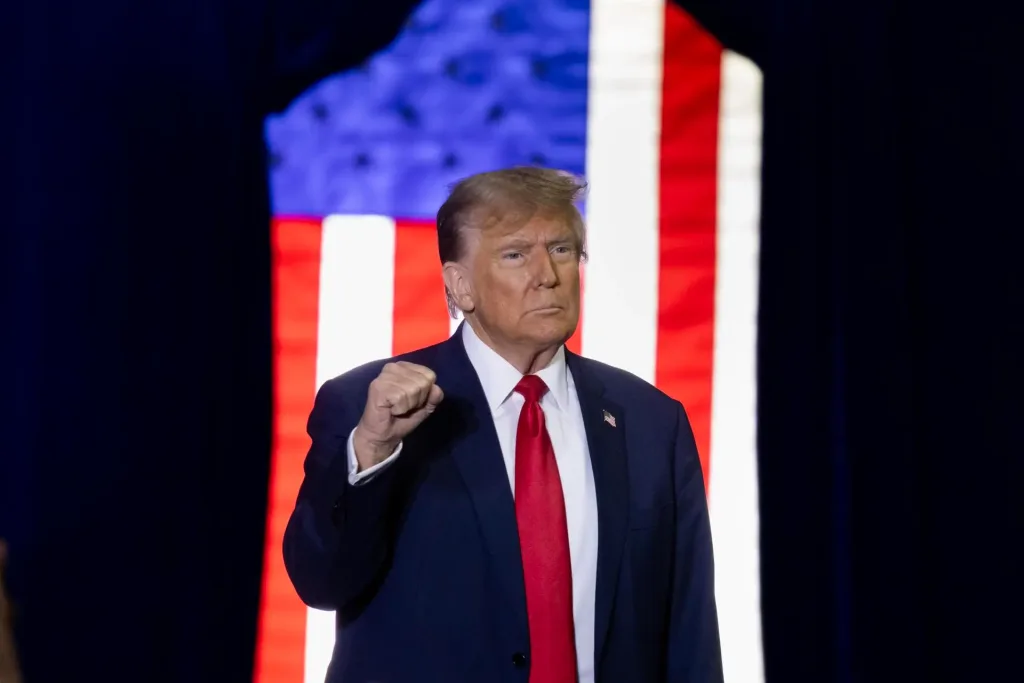
President Donald Trump announced Wednesday that he plans to ask the Supreme Court of Justice to rehear the birthright citizenship case. The request comes after the high court ruled against him last week. «I will request a new hearing before the United States Supreme Court, IMMEDIATELY. This judicial error will destroy the United States if they don’t change their absolutely insane decision,» Trump wrote on Truth Social.
Although theoretically it is possible for the Supreme Court to review a case, that process is extraordinarily rare in modern times. The petition would need to be filed within 25 days after the final decision is issued.
This type of request rarely succeeds, as the tribunal usually maintains its rulings once formally issued. Still, Trump’s insistence reflects the political relevance he assigns to this issue within his immigration agenda.
A Significant Blow to the Immigration Agenda
The conservative Supreme Court dealt an important blow to the president’s immigration agenda. The court ruled that his administration could not use an executive order to end citizenship by right of birth. That measure affected hundreds of thousands of babies born each year in U.S. territory.
The decision represents a major setback for a president who ran, in part, to end the so-called «birth tourism.» His administration has been marked by a strong push to crack down on both illegal and legal immigration.
A Divided Vote That Trump Seeks to Capitalize On
However, the decision was not as resounding a rejection as had been widely predicted. Several conservative justices separated from the majority, a division that Trump has already sought to exploit politically. The final vote was 6 to 3, within a judicial period marked by triumphs and defeats for the president.
The ruling keeps in effect the historical principle that every person born in U.S. territory is a citizen. This applies even if their parents do not have regular immigration status in the country.
Dissenting Votes Within the Court
Chief Justice of the Supreme Court John Roberts drafted the majority opinion, supported by conservative and liberal justices. Three conservative justices, Clarence Thomas, Samuel Alito, and Neil Gorsuch, openly disagreed with that final decision.
In an extensive 91-page dissenting vote, Thomas claimed that the majority «devalues» citizenship as understood by the drafters of the Fourteenth Amendment. Alito called the ruling a mistake and argued that it maintains a powerful incentive to enter or remain illegally in the country.
The Legal Argument Rejected by the Court
One of the main arguments presented by Trump’s lawyers held that the Fourteenth Amendment requires domicile in the United States to obtain birthright citizenship. The Court completely rejected that legal argument.
In the end, Roberts managed to block the executive order signed by Trump with the support of only one conservative justice, Amy Coney Barrett. That position was also joined by the three liberal justices of the court, thus consolidating the final majority.
That result shows how close the process was within the Court itself, despite it being a tribunal with a conservative majority. The final composition of the ruling generated immediate analysis among constitutional law experts.
Unexpected Progress Despite Legal Defeat
Despite the judicial defeat, Trump’s initiative achieved surprising progress both in courts and in the public sphere. The administration obtained support from 25 states and a significant number of members of Congress.
A relevant fact for the future is that Justice Brett Kavanaugh joined the dissenters, although for different reasons. He considered that there was no direct violation of the Fourteenth Amendment, but based his position on immigration laws from 1940 and 1952.
Trump Insists on a Legislative Solution
After learning of the ruling, Trump urged Congress to eliminate birthright citizenship by law. «The Supreme Court upheld birthright citizenship, which is very bad for our country, but we can easily fix it in Congress through a law,» he wrote on Truth Social. He added that a long and complicated constitutional amendment would not be necessary, and called on Congress to begin working on the issue immediately.
House Speaker Mike Johnson stated that Congress should do everything possible to address the matter. However, he publicly acknowledged that he still does not know what the concrete solution would be or the timeline for implementing it.
A Legislative Path With Strong Opposition
Johnson told CNN that the issue deserves Congress’s attention, although he called it premature to project a specific solution. He acknowledged that it is a major concern for Americans, pointing to alleged abuses of the current system.
An attempt to eliminate birthright citizenship through legislation would likely face strong opposition within Congress. The debate on this issue promises to extend over the coming months, amid pressure from the president on the Legislative Branch.
Canal oficial
Únete a nuestro canal de WhatsApp
Recibe las noticias más importantes al instante, sin spam. Solo lo que importa, cuando importa.

Autor
Anthony AstonitasDesarrollador de Software 12 años de experiencia
Comentarios
Inicia sesión para comentar
Es gratis y toma un minuto. Con tu cuenta también podés:
- Comentar y participar en la conversación
- Guardar notas para leer después
- Ver tu historial de lectura
- Recibir el boletín con tus temas favoritos