



This is the Republican plan to restrict birthright citizenship
Republicans in the House of Representatives rejected the Supreme Court’s Supreme Court decision upholding birthright citizenship, with House Speaker Mike Johnson leading efforts to restrict this constitutional right through either new legislation or a constitutional amendment.

Anthony Astonitas
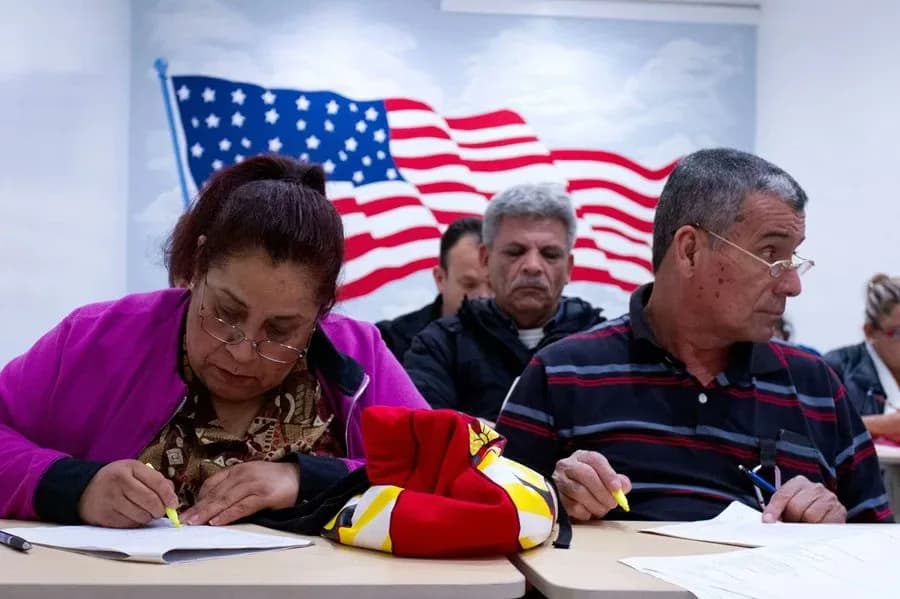
Republicans in the House of Representatives did not accept the Supreme Court ruling as a definitive defeat. Following the June 30 decision that upheld birthright citizenship, the party is already working on its legislative response. House Speaker Mike Johnson is leading internal discussions about next steps. The objective is to limit the right enshrined in the Fourteenth Amendment of the Constitution.
There are two options on the table and neither is straightforward. The first is to push new legislation that restricts who can access birthright citizenship. The second is to amend the Constitution directly, a historically difficult and lengthy process. Johnson acknowledged the obstacles but was clear about his party’s determination.
Pressure to act comes directly from the White House. Donald Trump demanded that Congress act "today" after learning of the Supreme Court ruling. "Congress should start today working to end birthright citizenship," he wrote on Truth Social. And he added that there is no need for "a long and cumbersome constitutional amendment" to achieve it.
The birth tourism argument
Johnson justified the legislative offensive by appealing to a phenomenon he characterized as abuse. He referred to so-called "birth tourism" or "maternity tourism." This practice consists of traveling to the United States on a tourist visa so that a baby born on U.S. soil acquires citizenship automatically. The Louisiana legislator described it as a distortion of the original purpose of the Fourteenth Amendment.
"It has been abused. It is one of those things that was intended to fulfill a noble and important purpose and has been frustrated, overused, and abused," Johnson said at a press conference. However, he presented no concrete figures to support his argument. This point was noted by analysts and media as an important weakness in his position.
Available data tell a different story. A New York Times report from last April emphasized that there is no official count of babies born to tourists in the United States. A 2020 estimate by the Center for Immigration Studies placed the figure between 20,000 and 26,000 babies per year. Immigration attorney Héctor Enrique Quiroga points out that birth tourism has not exceeded 0.3% of all births in the country.
A constitutional amendment: the longest path
Johnson acknowledged that amending the Constitution is the most difficult route. "It has only occurred 27 times in all the history of our nation," he noted. To achieve it requires two-thirds of both chambers of Congress and three-quarters of the states. "It is generally a process that takes many years and is very complicated," the Republican leader himself admitted.
Despite these obstacles, he did not rule out that route. "I am confident there will be much discussion about this," he said. On Sunday, on Fox News Sunday, he was more direct about the urgency of the matter. "It is necessary that we address this issue. We are examining all angles," he declared to the conservative channel’s cameras.
He also left the door open to a faster legislative solution. "If there is any legislative solution, we will push for it immediately," he argued. The difference between both routes is decisive in terms of timelines and political viability. Trump already made clear his preference for the legislative route, dismissing the constitutional amendment as unnecessary.
The Supreme Court ruling and existing legislative initiative
The Supreme Court issued its decision on June 30 by five votes in favor and four against. The justices determined that the Fourteenth Amendment guarantees citizenship to virtually all children born on U.S. soil. This includes children of parents who are in the country illegally or with temporary status. The ruling invalidated Trump’s Executive Order 14160 signed on January 20, 2025.
That order sought to establish that these children are not "subject to the jurisdiction" of the United States. The Supreme Court categorically rejected that argument. Justice Brett Kavanaugh, however, opened an important door in his vote. He noted that Congress could, in accordance with the Fourteenth Amendment, modify existing law or enact new legislation.
There is already at least one legislative initiative in that direction in the House. In January 2025, Texas Republican Brian Babin introduced the so-called "Birthright Citizenship Act." The law seeks to grant automatic citizenship only to children with at least one parent who is a U.S. citizen or national. It would also apply to children of lawful permanent residents or immigrants on active duty in the Armed Forces.
This proposal already had a presence in Congress before the Supreme Court ruling. Now it takes on new relevance as a vehicle for the Republican immigration agenda. The question that remains is whether they have the necessary votes to move forward. And whether that legislation would withstand the inevitable legal challenges that would come after.
Canal oficial
Únete a nuestro canal de WhatsApp
Recibe las noticias más importantes al instante, sin spam. Solo lo que importa, cuando importa.
Etiquetas

Autor
Anthony AstonitasDesarrollador de Software 12 años de experiencia
Comentarios
Inicia sesión para comentar
Es gratis y toma un minuto. Con tu cuenta también podés:
- Comentar y participar en la conversación
- Guardar notas para leer después
- Ver tu historial de lectura
- Recibir el boletín con tus temas favoritos