



Texas: City Refuses to Collaborate with ICE — What It Means for Migrant Workers
Near Houston, the small city of Hitchcock with 7,301 residents rejected collaboration with ICE, preventing local police from receiving federal funding and training for anti-immigration operations—a rare move in a state where Governor Greg Abbott actively pressures municipalities to join such agreements.

Anthony Astonitas
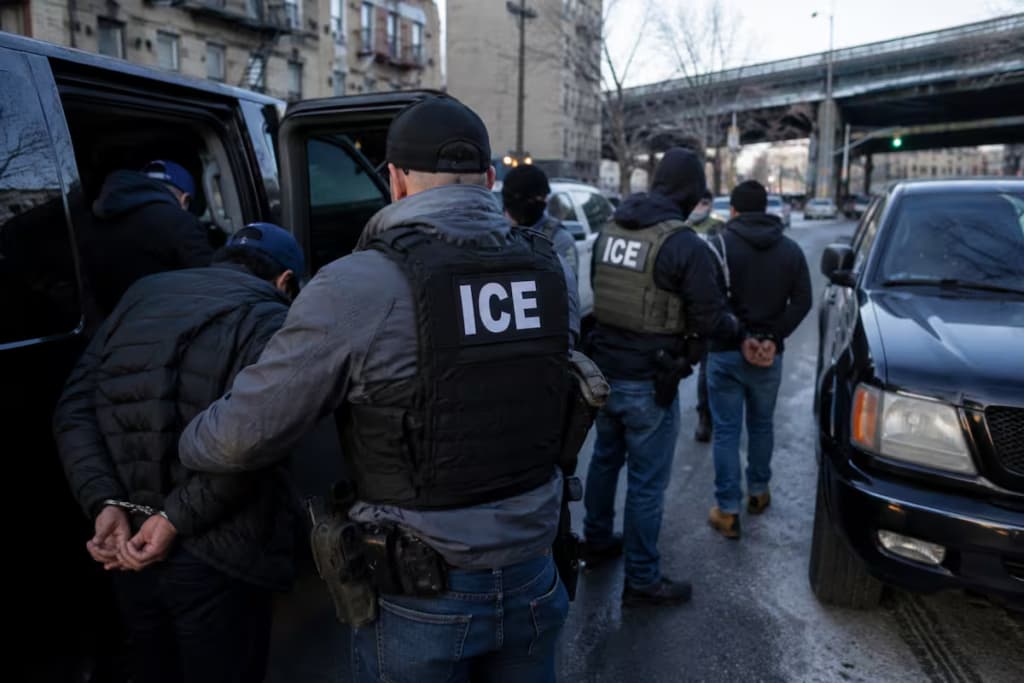
Near Houston, where an Immigration and Customs Enforcement agent killed an alleged undocumented migrant in July, a small city made an unusual decision. Hitchcock, with just 7,301 residents, rejected collaboration with the federal agency.
That decision prevents local police from receiving funding and training to participate in anti-immigration operations. The measure occurs in a state where the governor actively pressures municipalities to join these types of agreements.
It all revolves around the 287(g) program, in which more than 2,100 police agencies across the country participate. Hitchcock’s police chief explained to ABC News how it works: if an officer suspects someone is undocumented, they can confirm their status directly with the Department of Homeland Security.
The Economic Incentives Hitchcock Passed Up
The agreement with ICE does not come without financial benefits for police departments. According to Chief Evans, the program offers up to $100,000 for initial expenses or police vehicles.
Additionally, it provides up to $7,500 in equipment for each officer who completes the required training. The agreement also includes possible reimbursements for salaries and benefits for personnel involved in immigration operations.
Texas Governor Greg Abbott strongly supports collaboration with ICE. In April 2026, he threatened to withhold public funds from Dallas for refusing to participate in the program. That state pressure makes Hitchcock an exceptional case within Texas’s political landscape.
The contrast between the two cities is striking. While Dallas faced direct threats from the governor for its stance, Hitchcock proceeded with its rejection without receiving, so far, a similar public response from state government.
The Shadow of the Salgado Case Over the Decision
On July 20, during a city council session, opinions were divided. Ultimately, by a vote of three to two, council members prevented Hitchcock from joining the 287(g) program.
The vote came weeks after an incident with major repercussions in Houston. An ICE agent killed Lorenzo Salgado Araujo, an alleged undocumented migrant, in an incident that generated strong outrage in the region’s Hispanic community.
Council member Brian Smith defended the decision with an argument centered on community trust. According to his explanation, local police maintain a better relationship with citizens than external agents focused on immigration tasks. His colleague, Mary Combs Demby, acknowledged the department’s funding problems, but insisted that joining the program was not the right solution.
How the SB 8 Law Affects Other Texas Cities
The Hitchcock case gains additional relevance because of the state’s legal context. Since January 1, 2026, the SB 8 law went into effect, which has generated strong controversy among Texas’s Latino community.
This law requires counties with more than 100,000 residents and correctional facilities to collaborate with ICE. Hitchcock falls outside that legal obligation, precisely because its population is much smaller than that threshold.
Univision previously explained that the 287(g) program does not involve direct street raids. However, it does affect people arrested for other reasons, from driving without a license to more serious crimes.
Once a person is detained, if ICE considers them undocumented, it can initiate a deportation process. In cities that participate in the program, jail officials must review the immigration status of each detainee.
How It Affects Latino Citizens
This can result in longer detentions for migrant workers. It can also reduce trust in local authorities, especially in areas where a high proportion of the immigrant population lives. Entire families could avoid reporting crimes or seeking police assistance for fear that an administrative procedure will result in an immigration review.
The SB 8 law also includes an important legal pressure tool. If a police authority fails to comply with these provisions, the Texas attorney general can file lawsuits in district courts. These lawsuits seek to force agencies to implement corrective measures, adding another layer of pressure on smaller municipalities.
Agreements under this legal framework can be signed until December 2026. This means that other Texas cities will still face similar decisions in the coming months, as pressure from both state and federal authorities on local officials increases.
For migrant workers in the area, the Hitchcock case represents a temporary reprieve. However, Abbott’s pressure on other municipalities suggests that this type of local resistance could become the exception rather than the norm. Migrant advocacy organizations recommend that families document any interactions with police and know their basic rights in the event of detention.
Canal oficial
Únete a nuestro canal de WhatsApp
Recibe las noticias más importantes al instante, sin spam. Solo lo que importa, cuando importa.

Autor
Anthony AstonitasDesarrollador de Software 12 años de experiencia
Comentarios
Inicia sesión para comentar
Es gratis y toma un minuto. Con tu cuenta también podés:
- Comentar y participar en la conversación
- Guardar notas para leer después
- Ver tu historial de lectura
- Recibir el boletín con tus temas favoritos