



Supreme Court Rejects Restricting Birthright Citizenship Right
The U.S. Supreme Court struck down President Trump’s executive order attempting to restrict birthright citizenship in a decisive 6-3 ruling, affirming that children born on American soil are guaranteed citizenship regardless of their parents’ immigration status.

Anthony Astonitas
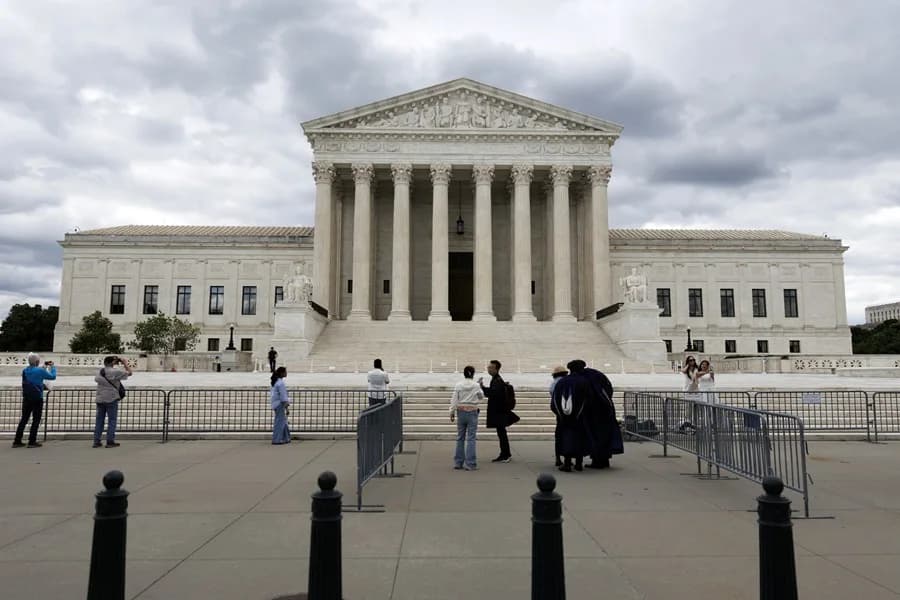
The Supreme Court of the United States issued a landmark verdict of major national significance. The justices formally struck down the executive order signed by President Donald Trump. The measure sought to drastically limit the granting of citizenship by right of birth. The judicial ruling consolidates a perennial constitutional principle that has governed the country for more than a century.
The judicial ruling was determined through a clear vote of six to three. With this result, the highest court affirmed that the Constitution guarantees U.S. nationality. The benefit applies to almost all children born within sovereign territory. The decision by the body of judges represents the definitive halt to one of the administration’s campaign promises.
The abolished regulation intended to prevent babies of undocumented parents from becoming automatic citizens. The decree also directly affected children of temporary foreign residents in the country. The ruling unifies the criteria of federal jurisprudence against the prerogatives of executive power. Civil organizations celebrated the resolution immediately in the streets.
What were the legal foundations used by the court majority?
Supreme Court Chief Justice John G. Roberts Jr. drafted the majority opinion of the full court. Roberts forcefully explained that Trump’s order directly violated the Fourteenth Amendment. The justice emphasized that children born on national soil are full citizens from birth. The immigration status of parents does not alter this legal principle.
«Citizenship, then as now, was the right to have rights,» Chief Justice Roberts wrote verbatim. The jurist argued that the rule allows free participation in the political community. Roberts recalled that the creators of the Fourteenth Amendment extended that promise to every person born free. «Today we uphold that promise,» the ruling concluded.
The conservative wing of the court experienced a notable division during the vote on the controversial case. Three conservative-leaning justices issued dissenting votes and would have permitted the application of restrictions. However, the bloc led by Roberts allied with liberal judges to preserve the current constitutional order. The ruling closes the dispute permanently.

How did the legal battle originate and what did the presidential decree stipulate?
The legal battle over citizenship formally began on the first day of Donald Trump’s second term. The president launched his administration with a high-impact political executive order. The official document was titled «Protecting the Meaning and Value of U.S. Citizenship«. The White House sought a radical change in naturalization processes.
The presidential decree declared that nationality would no longer be granted automatically by soil. The restriction affected children of migrants who entered the territory illegally. Likewise, the measure excluded those born to parents with legal but temporary visas in the country. This category included foreign students, workers, and tourists.
The executive order generated an immediate wave of legal challenges in multiple states. Civil rights organizations, migrant advocacy groups, and prospective parents filed emergency lawsuits. Lower federal courts responded by blocking the decree’s application preemptively. Government appeals brought the case to the highest court.
What real operational consequences did the Supreme Court’s ruling generate?
The controversial immigration decree from the White House never entered into effect in any state. During the months of litigation, the birth registry system operated under normal conditions. Various analysts noted that the central government was not making real preparations to modify the system. The administrative restructuring of civil registries would have been enormous.
The definitive ruling of the
Canal oficial
Únete a nuestro canal de WhatsApp
Recibe las noticias más importantes al instante, sin spam. Solo lo que importa, cuando importa.
Etiquetas

Autor
Anthony AstonitasDesarrollador de Software 12 años de experiencia
Comentarios
Inicia sesión para comentar
Es gratis y toma un minuto. Con tu cuenta también podés:
- Comentar y participar en la conversación
- Guardar notas para leer después
- Ver tu historial de lectura
- Recibir el boletín con tus temas favoritos