



Local police will be able to act as ICE deportation agents
ICE is expanding its agreements with state police in Indiana, Oklahoma, and Wyoming to authorize agents to participate in federal immigration operations through the 287(g) program’s Task Force Model, allowing officers to question people about their immigration status during routine traffic stops.

Anthony Astonitas
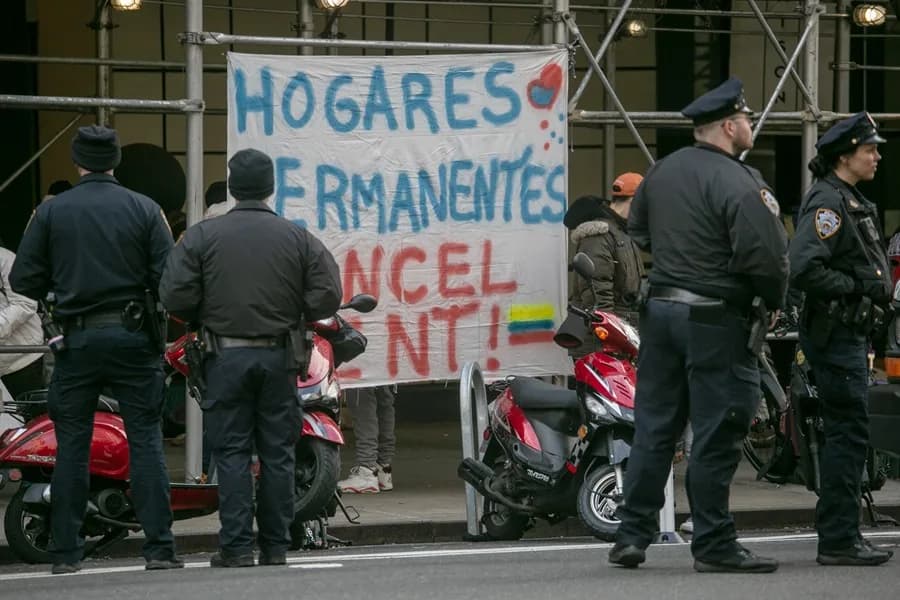
The Immigration and Customs Enforcement (ICE) is expanding its agreements with state police in Indiana, Oklahoma and Wyoming. According to an August 14 report by FreightWaves, these agreements authorize agents to participate in federal immigration operations.
The agreements were established under the Task Force Model of ICE’s 287(g) program. Once trained and credentialed, state agents can question people about their immigration status during traffic stops and vehicle inspections.
In Wyoming, 17 state Highway Patrol agents have already received credentials for immigration enforcement. Spokesman Aaron Brown acknowledged that a person without legal authorization can be detained and transferred to ICE custody during a routine traffic stop.
What is the 287(g) program and how does it work
Section 287(g) comes from a provision of the Immigration and Nationality Act of 1996, signed by President Bill Clinton. This rule authorizes the federal government to delegate immigration functions to state and local law enforcement agencies.
Currently there are three types of agreements. The Jail Enforcement Model allows officers to question inmates about their immigration status. Meanwhile, the Criminal Alien Program Model authorizes correctional officers to execute administrative immigration orders.
The Task Force Model, the broadest in scope, allows police and state agents to perform immigration functions during their regular operations. The Obama administration suspended it in 2012 following complaints of racial discrimination, but Trump reactivated it in 2025.
The program’s national reach according to official figures
According to ICE, the 287(g) program currently extends across 39 states and two territories. More than 2,000 state and local agencies have signed agreements with the federal government as of the most recent available date.
An analysis by FWD.us revealed that as of July 10, more than 1,400 agencies were participating exclusively in the Task Force Model. This places approximately one-fourth of the U.S. population under the jurisdiction of a participating agency.
Already in February, before the latest wave of agreements, at least 77.2 million people lived in a county with an agency enrolled in the program. This data comes from an analysis by the American Civil Liberties Union (ACLU).
Oklahoma as a national reference case
Oklahoma has become a model of reference for this police integration. In June 2025, broadcaster KOSU reported that 14 of the state’s 17 active agreements had been established since late February of that year.
The state reached having five state agencies participating simultaneously in the program. Within months, approximately 750 state agents were authorized to participate in immigration law enforcement duties.
During a 30-hour operation in western Oklahoma, agents reported the arrest of 91 immigrant commercial drivers. Another operation in the eastern part of the state resulted in 73 detentions, including 34 truck drivers.
Federal funding behind the expansion
As of March, Oklahoma‘s law enforcement agencies had contracts with ICE totaling at least $47 million, the second-highest amount in the country after Florida. At least 30 state agencies signed 287(g) agreements.
Nationally, FWD.us estimates that between $1.4 billion and $2 billion could reach participating agencies during 2026. The funds cover salaries, equipment, training, and payments linked to immigrant arrests.
Lance Schroyer, nominated to lead ICE, was key in developing the program in Oklahoma. He worked nearly three decades with the state Highway Patrol before advising the Department of Homeland Security on immigration matters.
Bipartisan background and persistent criticism
Trump expanded the program during his first term, growing from 34 participating agencies at the end of the Obama administration to more than 140. Biden promised to reverse those agreements, but his administration maintained nearly all of them.
An ACLU 2022 report titled «License to Abuse» found that 65% of participating agencies had documented histories of racial discrimination or other civil rights violations.
The organization has called on states and cities to withdraw from the program, arguing that local police should focus on serving their communities. Program supporters, in contrast, argue that it strengthens public and national security.
Lawmakers and civil rights organizations in several states have requested independent audits of participating agencies’ performance. They seek to determine whether there are patterns of discrimination based on appearance, language, or accent during detentions.
State officials who support the program argue that collaboration with ICE responds to border security needs and control of illegal drug trafficking in key commercial corridors.
For Hispanic communities, the growth of these agreements means that a simple traffic stop or vehicle inspection could result in direct contact with federal immigration authorities.
Canal oficial
Únete a nuestro canal de WhatsApp
Recibe las noticias más importantes al instante, sin spam. Solo lo que importa, cuando importa.

Autor
Anthony AstonitasDesarrollador de Software 12 años de experiencia
Comentarios
Inicia sesión para comentar
Es gratis y toma un minuto. Con tu cuenta también podés:
- Comentar y participar en la conversación
- Guardar notas para leer después
- Ver tu historial de lectura
- Recibir el boletín con tus temas favoritos