



How Will USCIS Online Filing Requirements Affect Your Green Card?
The U.S. Citizenship and Immigration Services (USCIS) implemented a major regulatory change requiring mandatory electronic filing of various immigration forms, including green card applications, citizenship, asylum, and employment authorizations. This phased transition will begin only after forms have been available online for 180 days and includes a mandatory 60-day notice period, while offering hardship exemptions for those unable to access digital services.

Anthony Astonitas
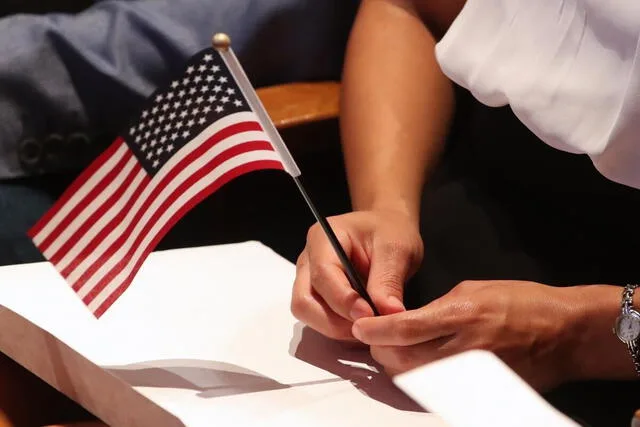
The U.S. Citizenship and Immigration Services (USCIS) officially implemented a transcendental regulatory change in its administrative procedures. The federal agency published in the Federal Register a provisional final rule that grants it the authority to require mandatory electronic filing of various forms. This measure seeks to radically transform the processing of petitions in the national immigration system.
According to reports from the newspaper El Nuevo Herald, the regulation will allow progressive enforcement of digital platform use for key applications. Among the procedures covered are permanent residence or green card, citizenship through naturalization, asylum petitions, and employment authorizations. In this way, authorities seek to migrate from paper to fully integrated digital systems.
The Department of Homeland Security (DHS) based the initiative on the need to strengthen national security. The digital transition will allow biometric data and backgrounds to be cross-referenced more efficiently among federal agencies. Consequently, this update represents one of the most profound operational restructurings in the agency in the last decade.

How Will the Phased Implementation of the New Mandatory System Work?
The regulation does not impose digital mandates abruptly for all existing forms. Rather, the regulation establishes a strict mechanism of mandatory phases before canceling in-person or mail options. The agency can only require online filing if the form has been digitally available for at least 180 days.
Additionally, authorities must issue a formal public notice with a minimum of 60 days’ notice on its official portal. From that point forward, individuals must create an account on the official USCIS website to complete their files. Applicants will have the option to enter information directly on the web or upload a PDF file along with supporting documentation.
For his part, former DHS official Adam Klein told Newsweek that the advantages of digitization are evident for the state. The collection of structured data improves decision-making and increases response speed in adjudications. Consequently, the government anticipates a substantial reduction in error margins during initial data entry.
| Regulation Phase | Time Requirement | Impact on Applicant |
| Prior Availability | Minimum 180 days online | The form must be active on the web before the mandate. |
| Public Notice | Minimum 60 days’ notice | The deadline for paper submissions is published. |
| Full Requirement | After deadlines expire | Submission is required exclusively through the USCIS digital account. |
What Will Happen to Those Who Cannot File Online?
The government ordinance considers exceptional situations for those users who face technological barriers or geographic limitations. People unable to comply with the digital mandate can request an exemption for undue hardship using Form I-936. However, granting this special permission will be subject to the exclusive discretion of officials.
The government projects that the elimination of paper will generate net savings of approximately 518 million dollars annually. This figure benefits both public coffers and petitioners themselves by reducing rejections due to lost documents. Additionally, the agency seeks to reduce its dependence on Treasury Department reception centers dedicated to physical mail.
According to estimates released by CNN, the acceleration of electronic payments will reduce weeks in file processing time. The platform enables immediate balance verification and instant issuance of payment receipts. Therefore, applicants will obtain official proof of payment quickly without waiting for postal confirmations.
| Aspect Evaluated | Traditional Paper System | New Mandatory Online System |
| Document Reception | Mailing to lockboxes via postal service | Direct upload in PDF format or web entry |
| Notification Time | Weeks via physical mail | Immediate digital confirmation in the account |
| Exemption Management | Not applicable | Form I-936 under official discretion |
What Is the Immigration Context for This Digital Transformation?
The implementation of this regulation coincides with a generalized tightening of immigration controls in the country. Recently, authorities modified their operational criteria to deny incomplete applications without issuing prior notices. Officials will no longer systematically send Request for Evidence or Notice of Intent to Deny.
Added to this measure is internal memorandum PM-602-0199, which requires more rigorous scrutiny of status adjustment petitions. The directive establishes that mechanically meeting requirements does not guarantee green card approval. Additionally, the administration implemented strict regulations on the validity of electronic signatures in all files.
The period for submitting public comments on the provisional rule will remain open on the Federal Register platform until October 13, 2026. Legal assistance organizations recommend that the community obtain bank accounts and familiarize themselves with the official USCIS portal. Timely preparation will be vital to avoid losing immigration benefits under the new requirements.
Frequently asked questions about mandatory electronic filing
Can I still mail my green card application?
For now yes, unless USCIS issues the specific 60-day notice for the form you need.
Guide to USCIS Digitalization
How Will Permanent Residence Applications Change in the U.S.?
The United States immigration system is undergoing one of its most profound technological transformations of the past decade. The U.S. Citizenship and Immigration Services (USCIS) formalized a regulation to gradually require mandatory electronic filing of various procedures. The measure, published in the Federal Register by the Department of Homeland Security (DHS), seeks to modernize data processing and reduce wait times.
Various Hispanic families in cities such as Miami and Los Angeles have experienced firsthand the transition toward the digital environment. Community members recount how traditional mailing of folders with hundreds of sheets of paper often resulted in postal losses and delays of several months. The update promises to centralize information, but also poses challenges for people with limited access to digital tools.
The central objective of the government agency is to optimize its internal operations and strengthen identity verification. According to reporting by El Nuevo Herald, the provision will progressively affect applications for permanent residence (green card), citizenship, asylum, and work authorizations. The agency seeks to reduce the operational burden on reception centers known as lockboxes.
What Are the Deadlines and Requirements for Mandatory Electronic Filing?
The transition to digital mandates will not happen overnight. The regulation establishes that a form can only be required electronically if it has been available online for at least 180 days. Additionally, the agency is obligated to publish a formal notice with a minimum of 60 days’ notice before enforcing the requirement.
| Aspect of the Regulation | Technical Details and Requirements |
| Prior time online | The form must have been available on the web for a minimum of 180 days. |
| Public notice | The agency will notify of the requirement with 60 days’ notice in advance. |
| Filing method | The form can be completed directly online or a PDF file with evidence can be uploaded. |
| Hardship exemption | It is requested through Form I-936 for qualified cases. |
Applicants must create an institutional account on the digital platform to manage their files. According to public information from USCIS, users will have the option to complete applications directly on the web or upload a PDF file along with required evidence. This method aims to prevent document rejection due to missing signatures or incomplete fields.
For those who lack internet access or do not possess digital skills, the regulation contemplates an exception. Users may request an exemption for undue hardship by submitting Form I-936. However, approval of this remedy will be subject to the exclusive discretion of the agency’s evaluating officers.
What Economic and Security Impacts Is the Department of Homeland Security Seeking to Generate?
The federal government estimates significant financial benefits from the full implementation of this digital policy. Figures from the DHS project net savings of approximately 518 million dollars annually for petitioners and the government. The reduction in paper use and immediate electronic payment will accelerate overall processing.
Estimated savings: US$ 518,000,000 annually
Required prior notice: 60 days
Form prior transition: 180 days
National security constitutes another of the pillars substantiated within the new regulatory text. According to statements gathered by Newsweek, former DHS official Adam Klein noted that the collection of structured data allows for much more agile and accurate analysis. The system optimizes fraud detection and strengthens background investigations.
On the other hand, the immigrant community faces an environment of greater rigor in evaluations. The new regulation joins rules in effect since August 5, which allow authorities to deny incomplete applications without first issuing a Request for Evidence (RFE) or a Notice of Intent to Deny (NOID).
How Does This Change Influence the General Immigration Context of 2026?
Digitalization is part of a set of regulatory adjustments implemented throughout 2026. In May, memorandum PM-602-0199 took effect, which tightened approval criteria for status adjustment. The document clarifies that meeting only technical requirements does not guarantee obtaining permanent residence.
| Immigration Regulation or Adjustment | Effective Date | Main Impact for Applicant |
| Memorandum PM-602-0199 | May 2026 | Increases discretion in status adjustment petitions. |
| Electronic Signatures Rule | July 2026 | Validates the use of digital signatures in immigration files. |
| Direct Denials | August 5, 2026 | Allows denying incomplete procedures without sending correction notices. |
| Mandatory Online Filing | August 11, 2026 | Initiates the legal framework to require progressive digital procedures. |
In July 2026, new guidelines on the validity of electronic signatures in immigration procedures also began to take effect. Additionally, authorities confirmed the resumption of benefit processing for citizens of Cuba and Venezuela following a period of technical review. These changes seek to unify verification criteria across all state platforms.
Legal support organizations recommend that the population stay informed through official channels. The public comment period on the electronic filing rule will remain open until October 13, 2026. Citizens and specialists can submit their observations before the measure is permanently consolidated.
Canal oficial
Únete a nuestro canal de WhatsApp
Recibe las noticias más importantes al instante, sin spam. Solo lo que importa, cuando importa.

Autor
Anthony AstonitasDesarrollador de Software 12 años de experiencia
Comentarios
Inicia sesión para comentar
Es gratis y toma un minuto. Con tu cuenta también podés:
- Comentar y participar en la conversación
- Guardar notas para leer después
- Ver tu historial de lectura
- Recibir el boletín con tus temas favoritos