



Forced Feeding of Migrants on Hunger Strike Denounced
A report reviewed by The Guardian reveals that ICE subjected at least one person on a hunger strike to forced feeding, forced hydration, or urinary catheterization. The denunciation has reignited criticism over medical treatment within migrant detention centers.

A report reviewed by The Guardian reveals that ICE subjected at least 1 person on a hunger strike to forced feeding, forced hydration, or urinary catheterization. The denunciation has reignited criticism over medical treatment within migrant detention centers.
The practice was documented by the ICE Health Service Corps, known as IHSC, in a report published online in February. The document mentions an anonymous person who stopped eating between October and December of last year.
Medical and human rights organizations consider these procedures may amount to torture. The finding comes amid new protests over unsanitary conditions, medical negligence, and retaliation in detention centers.
What Did the ICE Medical Report Reveal?
The IHSC document, cited by The Guardian, confirms for the first time that forced medical measures were used against a detained person who refused to eat. These measures include forced feeding, forced hydration, forced urinary catheterization, and involuntary blood draws. According to the report, at least 7 detained persons were on hunger strike in February of this year. The same text also estimates a budget of $4,504.75 for «external medical care» for patients on hunger strike.

Additionally, IHSC projected $168,928.01 for fiscal year 2026. That amount was calculated based on costs from the previous year, suggesting that ICE anticipates more cases of hunger strikes and associated medical care. The Department of Homeland Security, DHS, did not respond what type of forced treatment the detainee cited in the report received. It also failed to clarify whether there were more similar cases after February. The lack of official response fuels doubts about health supervision within the centers. It also raises questions about how much judicial oversight exists before ordering a forced intervention.
What Happened at Delaney Hall and Adelanto?
Between May and June, approximately 300 migrants initiated a hunger and work strike at Delaney Hall in New Jersey. The protests arose due to unsanitary conditions, medical negligence, and what they described as physical and psychological «torture.» The Trump administration repeatedly denied that detainees were refusing food as a form of protest. However, lawyers and advocates assert that a strike did occur and that pressure on inmates increased as the days passed.

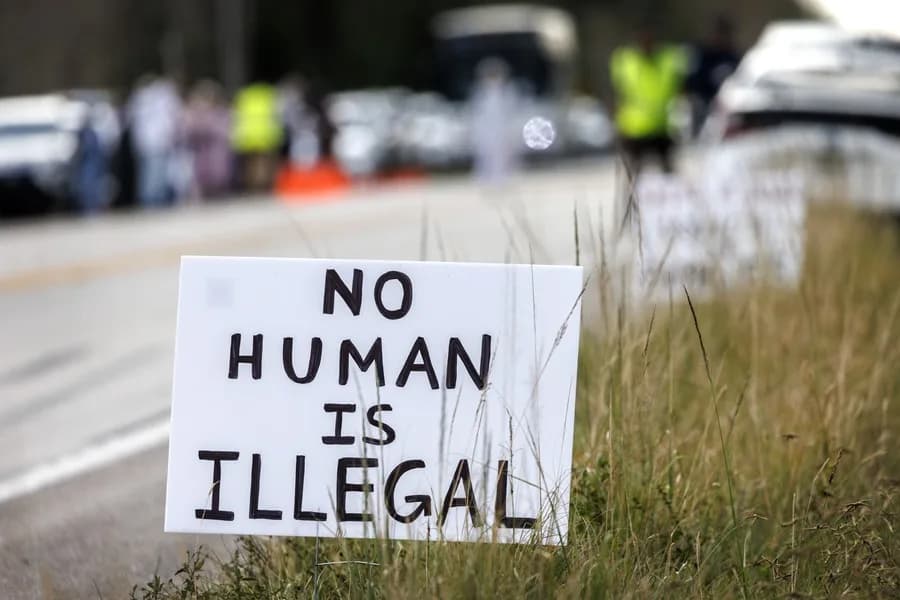
File photo of a message rejecting migrant detention centers of the Immigration and Customs Enforcement (ICE). EFE/Erik S. Lesser
Canal oficial
Únete a nuestro canal de WhatsApp
Recibe las noticias más importantes al instante, sin spam. Solo lo que importa, cuando importa.

Comentarios
Inicia sesión para comentar
Es gratis y toma un minuto. Con tu cuenta también podés:
- Comentar y participar en la conversación
- Guardar notas para leer después
- Ver tu historial de lectura
- Recibir el boletín con tus temas favoritos