



ALERT: ICE Hides Location of Thousands of Detainees With Deportation Orders
U.S. Immigration and Customs Enforcement (ICE) has stopped publicly revealing where it holds thousands of detainees with final deportation orders after removing that information from its online system on September 15. The unannounced change complicates efforts by lawyers and family members to locate their clients and loved ones.

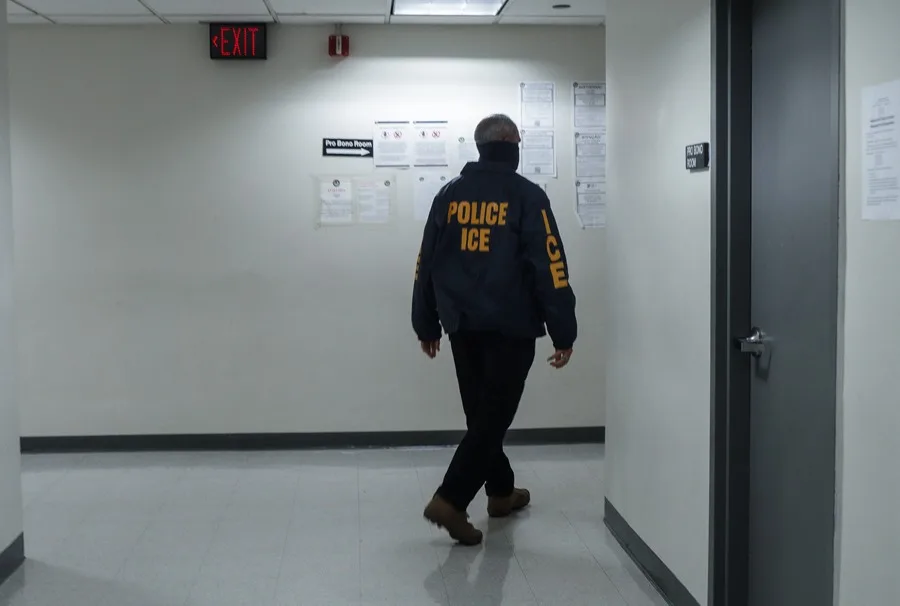
U.S. Immigration and Customs Enforcement (ICE) stopped publicly disclosing where it holds thousands of detainees with final deportation orders. The agency removed that information from its online system on September 15, according to three current and former ICE officials who spoke on condition of anonymity.
The change was not announced and makes it difficult for lawyers and family members to locate their clients and loved ones. Several lawyers confirmed to The Associated Press that their clients disappeared from the system this week.
A Silent Change in the Detainee Locator
ICE launched the online detainee locator in 2010. The system allows family members, lawyers, and the public to search for people in immigration custody, something that previously could only be done by calling regional offices.
The American Immigration Lawyers Association (AILA) alerted its members about the missing records last Friday. The measure does not apply to detainees in the Adelanto, California facility or in temporary facilities in Minneapolis, New York, or Chicago’s suburbs.
These centers were exempted because court litigation requires ICE to keep them visible in the system. DHS, the agency that oversees ICE, neither confirmed nor denied the change in response to a request from The Associated Press. In its response, it indicated that it prioritizes deportation of people with final removal orders.
What the Legal Framework Says About Deportation Orders
A final removal order occurs when an immigration judge orders a person to leave the country. This happens following a hearing, even if the migrant did not appear, and the decision has already been upheld on appeal or was not challenged.
DHS maintains that these individuals already received due process. However, those with a final removal order retain legal options to challenge their detention or expulsion.
These include requesting case reopening or filing a habeas corpus petition, which allows a judge to order release on constitutional grounds. Federal judges have issued thousands of orders to release detainees or grant bond hearings. Some individuals also have legal protections against being sent to their home country if they face risk of torture or persecution.
Nearly 16,000 people arrested and booked in ICE facilities in July had final removal orders. That figure represents more than one-third of total admissions to detention that month, according to ICE data obtained by the Deportation Research Project, based at UC Berkeley and UCLA. In early July, ICE detention facilities held more than 65,000 people total.
Families and Lawyers Face Uncertainty
Behind the numbers are concrete stories of anguish. Greg Chen, senior director of government relations at AILA, explained that many families believe their loved one has already been deported without being notified. «Families are panicking because they don’t know where the person might be,» he said.
Chen warned that the situation also affects the relationship between lawyers and clients. Without being able to locate a detainee, it becomes more difficult to file legal remedies before expulsion.
Atenas Burrola Estrada, deputy director of programs at Centro Amica for Immigrant Rights, said all her clients with final orders disappeared from the locator. The organization counted 17 cases through last Monday.
Among those affected are eight Somali men detained at the Guantánamo Bay Naval Base in Cuba, according to their attorney My Khanh Ngo of the American Civil Liberties Union (ACLU). Ngo explained that without access to a client’s location, it is «nearly impossible» to submit information timely to a court to stop their expulsion.
Michelle Méndez, legal director of the National Immigration Project, noted that immigration courts have made case reopening more difficult in recent months. This has resulted in more final orders against people who did not appear at their hearings. «To me, it’s nothing more than another way to make people disappear,» she stated.
What Affected Families Can Do
If a detained family member stopped appearing in the ICE locator, immigration lawyers recommend contacting the detention facility where they were last held directly. It is also possible to request information through the ICE hotline or seek support from organizations like AILA or the ACLU.
Those representing a detainee with a final order can evaluate, together with a lawyer, whether a habeas corpus petition or motion to reopen is appropriate. The window to act is usually short, so seeking legal advice as soon as possible is key to preserving those options.
Canal oficial
Únete a nuestro canal de WhatsApp
Recibe las noticias más importantes al instante, sin spam. Solo lo que importa, cuando importa.
Etiquetas

Comentarios
Inicia sesión para comentar
Es gratis y toma un minuto. Con tu cuenta también podés:
- Comentar y participar en la conversación
- Guardar notas para leer después
- Ver tu historial de lectura
- Recibir el boletín con tus temas favoritos