



Oil Prices Fall Following U.S.-Iran Dialogue
International oil prices fell on Monday as the United States and Iran began talks in Switzerland, with both countries announcing a 60-day roadmap to reach an agreement. The West Texas Intermediate crude fell 0.5% to $75.47 per barrel, while North Sea Brent retreated 1.5% to $79.38, as markets reduced fears of supply disruptions in the Middle East.

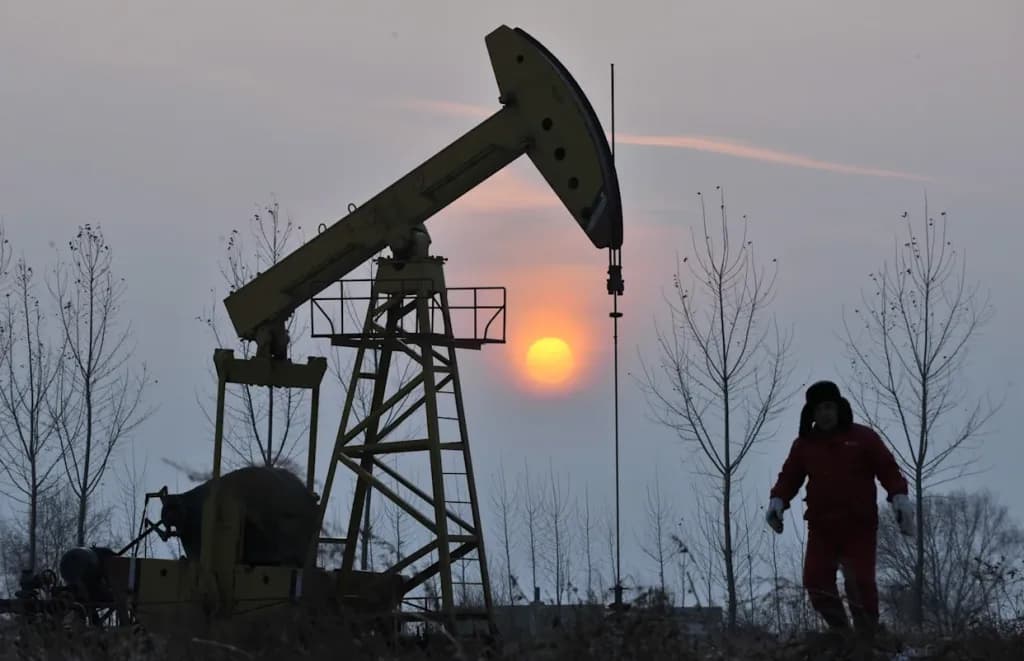
International oil prices registered a decline on Monday following the start of talks between the United States and Iran in Switzerland. The announcement of a roadmap to reach an agreement within 60 days reduced tension in energy markets.
The barrel of West Texas Intermediate (WTI) fell 0.5% and settled at $75.47. Meanwhile, North Sea Brent retreated 1.5% to $79.38 during Asian trading operations. The market’s reaction reflects a shift in expectations. Investors perceive a lower probability of disruptions in global oil supply.
Why Did Oil Prices Fall?
The main reason was diplomatic progress between Washington and Tehran. The talks reduce the risk of escalation in the Middle East. Recent conflict had driven prices upward. Markets feared impacts on key energy transport routes. With dialogue underway, that fear diminishes. This generates downward pressure on crude prices.
What Role Does the Strait of Hormuz Play?
The Strait of Hormuz is a strategic waterway. About one-fifth of global oil and gas passes through it. Any conflict in that area directly affects the energy market. That is why investors closely monitor the situation. The negotiations include measures to ensure security in this route. This has been key to calming markets.
What Was Agreed Upon in U.S.-Iran Talks?
The delegations agreed on a roadmap to achieve an agreement within 60 days. They also agreed to establish a direct line of communication. This mechanism aims to prevent incidents at sea. The measure is intended to reduce tensions and prevent conflicts. Additionally, technical talks will begin. These will address issues such as Iran’s nuclear program.
How Did the Previous Context Influence the Market?
Before the dialogue, there was concern about a possible escalation. Clashes between Israel and Hezbollah increased uncertainty. There were even doubts about the continuity of negotiations. Statements from President Donald Trump generated tension. However, the meeting took place. Mediators highlighted a positive atmosphere.
What Did Mediators Say About the Progress?
Pakistan and Qatar described the talks as constructive. Both countries are acting as intermediaries in the process. They noted that significant progress was achieved. This strengthened market confidence. Diplomatic optimism had an immediate impact. It was reflected in falling oil prices.
How Did Financial Markets React?
Asian stock exchanges showed a positive trend. Tokyo’s Nikkei 225 index rose 2%. In South Korea, the Kospi advanced 1.3%. Taiwan recorded an increase of 2.7%. The technology sector led the gains. Semiconductor companies stood out on the day.
What Markets Did Not Follow the Trend?
Not all stock exchanges reacted the same way. Hong Kong, Shanghai, and Singapore registered declines.
This reflects the diversity of factors that influence markets. Not all investors react the same way. Even so, the overall sentiment was positive. The decline in oil helped improve economic perspectives.
What Is Expected for the Energy Market?
Oil market behavior will depend on the progress of the
Canal oficial
Únete a nuestro canal de WhatsApp
Recibe las noticias más importantes al instante, sin spam. Solo lo que importa, cuando importa.

Comentarios
Inicia sesión para comentar
Es gratis y toma un minuto. Con tu cuenta también podés:
- Comentar y participar en la conversación
- Guardar notas para leer después
- Ver tu historial de lectura
- Recibir el boletín con tus temas favoritos