




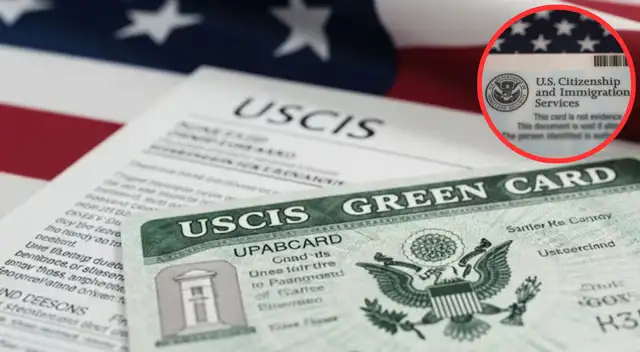
For thousands of Latin American families arriving in the United States, obtaining a work authorization card represents immediate relief. This document opens doors to formal employment, allows for obtaining a Social Security number, and facilitates opening bank accounts. However, there is a common confusion that generates false expectations: believing that having permission to work is equivalent to having a resolved legal situation. The reality is that work authorization is a temporary measure that does not modify the applicant’s underlying legal status.
This distinction is fundamental for those seeking asylum or humanitarian protection in the country. The work permit is simply a subsistence tool while immigration authorities decide on the main case. According to reporting by Telemundo, obtaining this card does not imply recognition of a regular immigration status. Beneficiaries remain in a state of legal uncertainty until there is a formal resolution. Meanwhile, the immigration clock keeps running under rules that change constantly and that demand extreme vigilance on the part of the interested party.
The U.S. immigration system clearly distinguishes between the right to work and the right to remain legally on a permanent basis. An asylum applicant can have a valid card and still be technically considered «undocumented with a pending case.» This legal paradox affects the emotional stability and long-term planning of families. Understanding the limits of this benefit is the first step to avoiding mistakes that could compromise future residence in the country.

What Does It Mean to Be in a «Legal Limbo» with Work Authorization?
The condition of «legal limbo» perfectly describes the reality of those waiting for an asylum interview or a hearing before a judge. Although the person has an official government document, their case has still not been decided by the competent authorities. Legal experts have warned that work permits are only proof that there is an active case in the system. According to the U.S. Citizenship and Immigration Services (USCIS), immigration status is only obtained through the approval of a visa, residency, or the granting of asylum.
This waiting category particularly affects citizens of countries with current restrictions, such as Venezuela or Guatemala. In these cases, processes to obtain the green card may be paused or suffer significant delays. The immigration attorney consulted by Telemundo explained that, although there is no clear date for resolution, it is preferable to have a pending case than to have nothing. The protection provided by the permit is real, but it does not guarantee that the person can stay in the country if the main case is rejected.
For many, the economic burden of maintaining this protection is high. The cost to process the first work permit for those applying for asylum is 560 dollars. This fee does not allow for payment waivers, according to the organization ASAP (Asylum Seeker Advocacy Project). For a newly arrived family that does not yet have stable income, this amount represents an enormous financial sacrifice. However, it is the only legal path to avoid informal work and the risks of exploitation that this entails.
Comparison Between Work Permit and Immigration Status
| Characteristics | Work Permit (EAD) | Immigration Status (Asylum/Residency) |
| Nature | Temporary work authorization. | Right to legal permanence. |
| Validity | 18 months (new rules as of 2025). | Indefinite or subject to status renewal. |
| Dependence | Depends on a pending asylum case or status adjustment. | Is the final and favorable result of the case. |
| Social Security | Allows requesting a Social Security number. | Includes full social benefits. |
| Foreign Travel | Requires a separate travel permit (parole). | Allows travel under certain legal conditions. |
What Are the New Rules for Applying for and Renewing Work Authorization?
As of December 4, 2025, the landscape for work permits changed drastically in terms of duration. Documents issued from that date have a validity of only 18 months. This contrasts with the 5-year permits that were previously granted. This adjustment requires applicants to be much more attentive to expiration dates. If a person received their permit for 5 years before December 2025, that term is still respected. But, for current renewals, the validity period is much shorter.
The renewal process has also experienced increases in operational costs. Currently, renewing the permit costs 745 dollars if the application is done online. If the applicant prefers to send it by postal mail, the cost rises to 795 dollars, according to data verified by ASAP. Additionally, automatic validity extensions have been eliminated for applications submitted after October 30, 2025. Only those who submitted their renewal before that date maintain the 540-day extension after their physical card expires.
The legal timeframe for the government to resolve these requests is theoretically 30 days. However, in practice, delays are extremely frequent due to case accumulation. Asylum applicants must wait 150 days after submitting their protection form before requesting the permit. Once the application is made, they can receive the card after 180 days have passed since the asylum application was submitted. It is vital not to leave the process for the last minute, as being without a valid permit can mean immediate loss of employment.
What Limitations and Exclusions Exist for Obtaining This Benefit?
Not all immigrants with an open case are eligible to work legally in the United States. There are strict legal barriers, especially those related to criminal records. Those convicted of what federal law calls an «aggravated felony» are completely excluded. In these cases, even if the person has a pending asylum case, they will not be able to receive work authorization. It is advisable to consult with organizations such as the ACLU (American Civil Liberties Union) if there are doubts about eligibility due to past infractions.
Furthermore, the change in extension policies affects other immigration categories. People with Temporary Protected Status (TPS) or family-based residency applications are also under the new regime. If they did not renew before October 29, 2025, they do not have the automatic 540-day extension. This means that if their card expires and the renewal has not yet arrived, they could become temporarily unable to work legally. Time management has become as important as compliance with legal requirements themselves.
The system severely punishes technical errors in applications. Therefore, regular verification of case status on the USCIS portal is a mandatory task. Incorrectly entered data or incorrect payment can result in application rejection. In the immigration environment of 2026, precision is fundamental. The work permit is a lifeline, but it is a lifeline that requires constant maintenance and a clear understanding that it is not the final goal, but only a means to survive while true regularization arrives.
Costs and Timelines for Work Permits (EAD) 2026
| Concept | Amount or Timeline | Observations |
| Initial Application (Asylum) | 560 USD | No possibility of fee waiver. |
| Online Renewal | 745 USD | Most economical and fastest option. |
| Renewal by Mail | 795 USD | Requires physical submission of documents. |
| Wait to Apply | 150 days | Time after submitting the asylum form. |
| New Validity Period | 18 months | Applies to permits issued as of December 2025. |
How to Ensure That Work Authorization Is Not Lost Due to Negligence?
The best strategy to protect your right to employment is anticipation. Given that government processing times are unpredictable, it is advisable to begin renewals months in advance. Maintaining a physical and digital copy of each form submitted is essential for any future claims. If the government delays more than 25 days in providing an initial response, there are legal avenues to push for a resolution. Immigrant advocacy organizations can provide guidance on how to file these complaints effectively without jeopardizing the case.
Another key point is change of address. Many immigrants lose their work permits because postal mail is sent to an old address. The law requires reporting any change of residence to USCIS within 10 days. Failing to do so can cause the physical card to never reach your hands or be lost in the system. Furthermore, if you change immigration categories (for example, from asylum applicant to TPS beneficiary), you must ensure that your work permit is linked to the correct category to maintain its validity.
In conclusion, the work permit is a powerful but limited tool. It grants economic stability but not security of permanence. For Latinos in the United States, it is the engine that allows supporting the family while fighting the most important legal battle: permanent legal status. Being informed about fees, timelines, and criminal exclusions is the only way to successfully navigate this complex system. Qualified legal advice will always be the best investment to transform a temporary permit into a safe and permanent life in the country.
Frequently Asked Questions (FAQs)
1. If My Work Permit Expires, Do I Lose My Asylum Case?
Not necessarily. The expiration of a work permit does not invalidate your asylum application. However, you will lose the legal right to work and could have problems with your employer until you receive the new document.
2. Can I Travel to My Home Country with a Work Permit?
Absolutely not. The work permit is not a travel document. Leaving the United States without a prior travel permit (Advance Parole) is considered an abandonment of your asylum application. Furthermore, traveling to your home country can invalidate your argument that you fear returning.
3. What Happens If I Cannot Pay the 745 Dollars for Renewal?
Unfortunately, for asylum applicants, the cost is mandatory. Some local organizations or churches sometimes offer microloans or aid funds for immigrants, but the government does not grant waivers for this specific category.
4. Can My Employer Fire Me If My Renewal Is Being Processed?
If you have the automatic extension (having applied before the October 2025 deadline dates), your employer must accept it. If you do not have the extension, technically you do not have a valid permit and the employer could be required to suspend or fire you according to labor laws.
Canal oficial
Únete a nuestro canal de WhatsApp
Recibe las noticias más importantes al instante, sin spam. Solo lo que importa, cuando importa.

Autor
Anthony AstonitasDesarrollador de Software 12 años de experiencia
Comentarios
Inicia sesión para comentar
Es gratis y toma un minuto. Con tu cuenta también podés:
- Comentar y participar en la conversación
- Guardar notas para leer después
- Ver tu historial de lectura
- Recibir el boletín con tus temas favoritos