




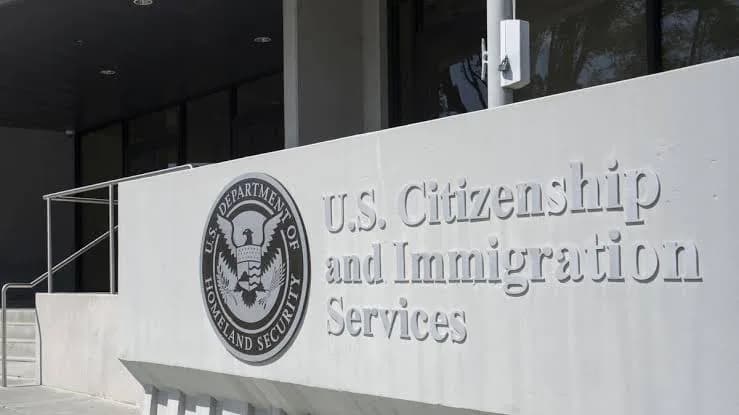
Immigrants seeking to obtain permanent residency in the United States, commonly known as green card, will face a new evaluation framework for the public charge rule. The U.S. Citizenship and Immigration Services (USCIS) published a comprehensive update to its Policy Manual on August 18, 2026. This modification responds to a final rule approved by the Department of Homeland Security (DHS) on July 16 and formally published in the Federal Register on July 20.
The technical update seeks to clarify the criteria that immigration officers use to determine whether an applicant could become primarily dependent on government support. The adjustment does not modify form fees, but substantially alters the evidence that applicants must provide in their files.

This measure raises concerns among Hispanic families seeking to regularize their status through family or employment-based petitions. For this reason, understanding the scope of the changes is essential to prevent administrative denials in status adjustment proceedings.
| Aspect of the Regulation | Details of the Public Charge Regulation |
| Official Publication Date | July 20, 2026 in the Federal Register. |
| Effective Date | September 18, 2026. |
| Issuing Agency | Department of Homeland Security (DHS) and USCIS. |
| Guarantee Mechanism | Submission of bond through Form I-945 (by invitation). |
When Do the New Public Charge Rules Take Effect?
The new criteria will begin to apply strictly starting September 18, 2026. All status adjustment applications received or postmarked on or after that date will be evaluated under the new Policy Manual parameters. Until that deadline is met, authorities will maintain the previous methodological guidance for processing pending cases.
The date the applicant receives public assistance will mark a crucial technical difference within the evaluation process. For means-tested benefits received before September 18, officers will consider only cash benefits for income support or long-term institutionalization at the state’s expense.
In contrast, for benefits received on or after September 18, the evaluation catalog expands significantly. Authorities may consider means-tested assistance, such as housing subsidies, SNAP food stamps, scholarships or university financial aid, and other similar support.
Who Is Affected by the Change in Permanent Residency Applications?
Public charge inadmissibility analysis does not affect all persons applying for legal residency in the United States. The Immigration and Nationality Act clearly establishes which categories must undergo this screening and which are completely exempt from the requirement.
Among the groups subject to this evaluation are spouses, children, and parents of U.S. citizens, as well as relatives petitioned by permanent residents. Also included are fiancés of citizens, workers based on employment or investment petitions, certain U.S. government employees abroad, and diversity visa lottery winners.
Conversely, Congress has maintained strategic exemptions to protect vulnerable populations. Refugees, asylees, special immigrant minors, and persons protected by the Violence Against Women Act (VAWA) are not subject
Canal oficial
Únete a nuestro canal de WhatsApp
Recibe las noticias más importantes al instante, sin spam. Solo lo que importa, cuando importa.
Etiquetas

Autor
Anthony AstonitasDesarrollador de Software 12 años de experiencia
Comentarios
Inicia sesión para comentar
Es gratis y toma un minuto. Con tu cuenta también podés:
- Comentar y participar en la conversación
- Guardar notas para leer después
- Ver tu historial de lectura
- Recibir el boletín con tus temas favoritos