




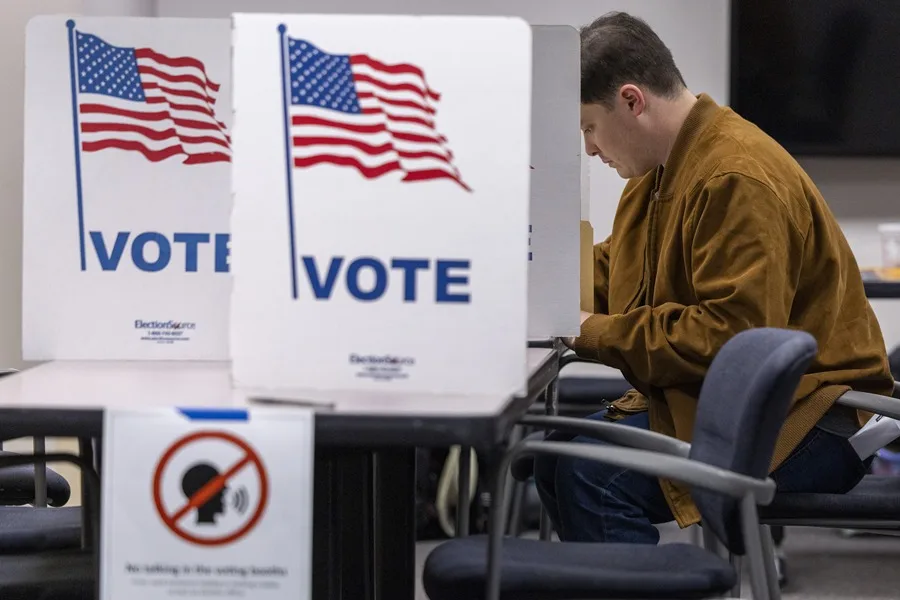
The debate over electoral integrity and the presence of law enforcement agencies at voting centers has reached unprecedented relevance. Various political statements from the administration of President Donald Trump have suggested the need to increase surveillance during election days to prevent alleged irregularities. These declarations generated deep concern among activists and civil rights organizations defending the Hispanic community. The central concern lies in the possible deployment of Immigration and Customs Enforcement (ICE) agents. However, the legal framework currently in place in the United States establishes strict and insurmountable barriers to protect the democratic exercise of all citizens.
Federal and state laws guarantee that voters can go to the polls without fear of retaliation, persecution, or government harassment. Consequently, any attempt to deploy armed officials at voting centers would contradict historical statutes designed to safeguard the neutrality of the process. According to information released by CNN en Español, constitutional law experts point out that threats of police surveillance at polling places lack legal operational grounds. Additionally, courts have rapid response mechanisms to stop any abuse of power.
For immigrant communities and families with mixed immigration status, the mere presence of federal agents in the vicinity of a polling place could generate a chilling effect. It is crucial to clarify that the right to vote is exclusive to properly registered U.S. citizens on the voter rolls. Nevertheless, current regulations protect the physical voting environment so that no voter is subject to undue pressure or arbitrary reviews. Below is an analysis of the legal safeguards that protect polling places against any attempt at state intimidation.

What Do Federal Statutes Say About the Presence of Armed Agents at Voting Places?
U.S. legislation explicitly prohibits the presence of troops or armed civilian officials at the locations where general elections or primaries are held. A comprehensive analysis published by the Brennan Center for Justice details that sections 592, 593, and 595 of Title 18 of the U.S. Code classify interference by armed agents in elections as a federal crime. These provisions seek to prevent the sitting government from using public force to influence election results.
| Code / Federal Law | Main Provision | Penalty or Mandate |
| 18 U.S.C. § 592 | Prohibits presence of troops or armed officials at polling places | Federal crime with prison sentences and fines |
| 18 U.S.C. § 594 | Punishes intimidation or coercion toward any voter | Felonies for interfering with voting rights |
| Civil Rights Act of 1965 | Prohibits tactics of harassment or discrimination in the process | Injunctions and immediate judicial intervention |
Likewise, the Voting Rights Act severely punishes any individual or authority who attempts to intimidate, threaten, or coerce a citizen to refrain from voting. ICE officials or U.S. Customs and Border Protection (CBP) officers do not possess jurisdiction or legal authority to monitor electoral processes within voting precincts. Therefore, any administrative order intended to send immigration agents to voting centers would be illegal and unconstitutional from its inception.
The legal framework was conceived precisely to stop abuses of
Canal oficial
Únete a nuestro canal de WhatsApp
Recibe las noticias más importantes al instante, sin spam. Solo lo que importa, cuando importa.
Etiquetas

Comentarios
Inicia sesión para comentar
Es gratis y toma un minuto. Con tu cuenta también podés:
- Comentar y participar en la conversación
- Guardar notas para leer después
- Ver tu historial de lectura
- Recibir el boletín con tus temas favoritos