




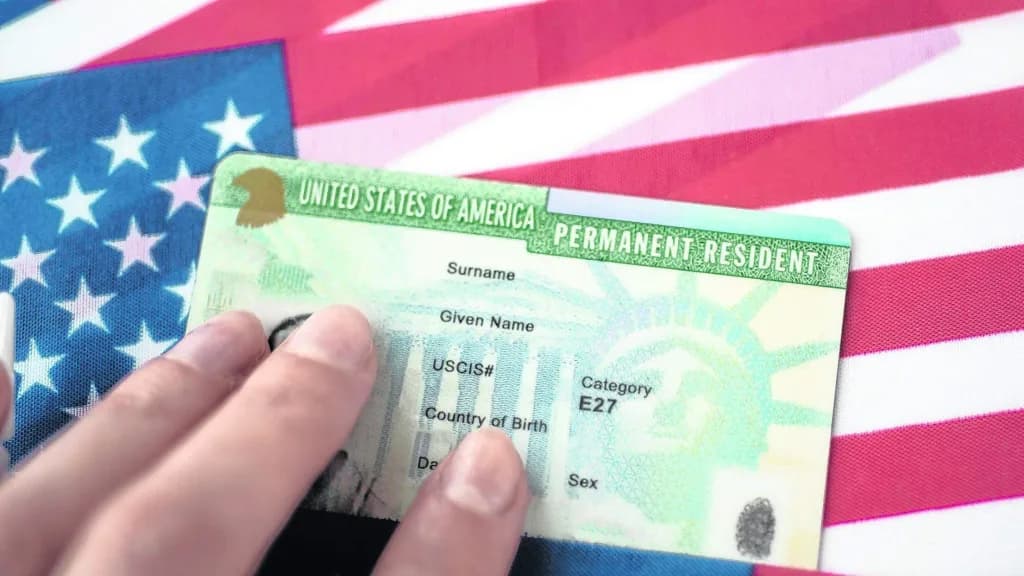
The path to permanent residency in the United States has always required patience, documentation, and financial stability. However, the rules of this process could undergo a regulatory change of historic proportions. Many Latino families remember how complex it was to gather application fees a decade ago. Currently, the landscape appears even more restrictive for new applicants. President Donald Trump’s administration is evaluating the implementation of a new economic requirement that has set off alarms in the immigrant community. The technical proposal contemplates the possibility of requiring a $100,000 bond from certain foreigners who are processing their green card from abroad.
This measure seeks to serve as a mechanism to definitively demonstrate the financial solvency of the petitioner. According to initial reports from government agencies, the initiative is in the phase of technical and regulatory evaluation. This means that the regulation has not yet been officially approved or applied at consulates. The central debate revolves around the criteria for financial admissibility to legally establish oneself in the country. The explicit objective of federal authorities is to ensure that new residents do not depend on the state’s social assistance programs.
For the Hispanic population, both undocumented and resident, understanding these variations is crucial for planning their family’s future. Consular processes are usually stressful and costly for middle-income family units. For this reason, the dissemination of these public policy drafts generates a justified sense of urgency in community legal advisory offices. The detailed analysis of the proposal makes it possible to clarify who would be the main affected parties if this requirement were to take effect.

What is the origin of this economic proposal and which departments coordinate it?
The conceptualization of this financial filter responds to a coordinated strategy among various departments of the U.S. Executive Branch. According to reporting from specialized media outlet The Hill, State Department spokesman Tommy Pigott noted that the administration is working with the Department of Homeland Security (DHS) on these reforms. The primary purpose of both government entities is to strengthen current immigration controls and protect the funds of public benefit programs. The authorities seek to prevent the use of subsidies by recently arrived individuals in the country.
To achieve this goal, government legal advisors are studying the use of specific legal authority. This prerogative is already contemplated in the Immigration and Nationality Act (INA), a federal law that governs all immigration processes in the country.
The government approach proposes that this $100,000 bond would not constitute a definitive tax or a lost payment. Rather, it would be structured as a security deposit that could be returned to the interested party later. Preliminary guidelines indicate that the money could be contributed by the applicant themselves or by direct family members who already legally reside in the United States. Despite this flexibility in the source of funds, the amount still represents an insurmountable barrier for most international workers.
| Aspect of the Proposal | Technical Detail of the Regulation |
| Proposed Amount | $100,000 |
| Target Population | Applicants abroad at risk of public charge |
| Nature of Payment | Refundable bond under compliance with conditions |
| Permitted Financiers |
Canal oficial
Únete a nuestro canal de WhatsApp
Recibe las noticias más importantes al instante, sin spam. Solo lo que importa, cuando importa.
Etiquetas

Comentarios
Inicia sesión para comentar
Es gratis y toma un minuto. Con tu cuenta también podés:
- Comentar y participar en la conversación
- Guardar notas para leer después
- Ver tu historial de lectura
- Recibir el boletín con tus temas favoritos